BNB (BNB)

$570.72  +1.72%  24H

Social Sentiment Index (SSI)

Market Pulse Ranking (MPR)

X Posts

  • Biteye Media Educator D
     80.93K  @BiteyeCN

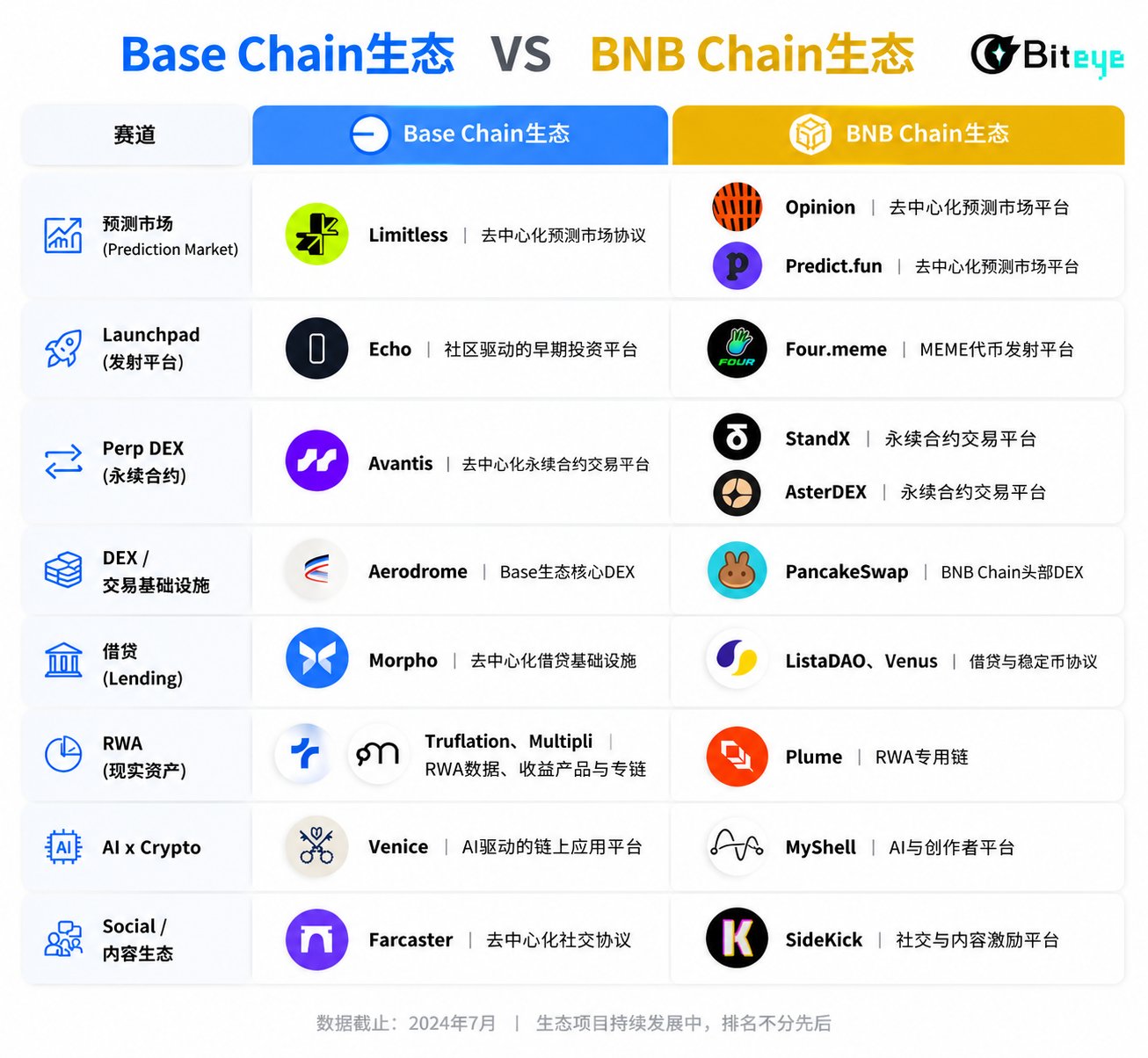
    “Base Publishes a ‘Self‑Criticism Edict’: a three‑year roadmap, jolted awake by Robinhood in two weeks?” 🧐 In the past two weeks, Robinhood Chain’s active addresses have surged rapidly, even breaking the one‑million mark. In contrast, Base—already three years old, backed by Coinbase, with U.S. compliance advantages and a user base of tens of millions—should have been the most likely L2 entry point for ordinary users. Yet it is now being quickly chased by a brand‑new chain that just launched. This explains why the Base ecosystem is repeatedly issuing “self‑criticism edicts,” indicating a shift in direction. In the past, Base poured massive resources into: SocialFi Creator Economy but market feedback fell short of expectations. With Cobie taking over the Base App, Coinbase’s strategic game board is being reset. This is not only a reflection on the previous “puzzle‑piece” development approach, but also a deep exploration of the future main narrative of crypto. Historically, Coinbase has preferred to fill ecosystem gaps by investing in or acquiring mature products. However, these independent product lines have struggled to work together. Now Base’s goal is clear: stop supporting isolated applications and instead deeply integrate wallet, social, trading, investment, and content distribution, fully pursuing the ultimate narrative of a “Super App”. This starkly outlines the genetic differences between Coinbase and Binance; the two giants chose completely different expansion logics from day one. 👇 1️⃣ Binance’s approach resembles a traditional internet platform: it cultivates entrepreneurs within its ecosystem. Binance steps in early, providing capital, traffic, market resources, and even helping projects with cold‑starts. Essentially a closed loop: Invest in projects → Feed users → Project growth → Feed back into BNB Chain → Strengthen Binance ecosystem. Thus many leading projects in the BNB ecosystem bear a clear Binance DNA, such as: StandX @StandX_Official U @UTechStables Predict fun @predictdotfun 2️⃣ Base’s approach is more like a typical Silicon Valley company: it acquires user entry points quickly through capital and M&A. Coinbase excels at spotting already‑validated products and then absorbing them into its ecosystem via acquisition or integration. User → Community → Product capability → Network effect – a model similar to Google buying YouTube or Meta acquiring Instagram. The advantage is speed, bypassing the early trial‑and‑error phase. Examples include: Vector @VECTORDOTFUN Echo @echodotxyz Deribit @DeribitOfficial Biteye’s system maps the core tracks shown below, comparing the current ecosystem layouts of Base and BNB Chain. 👇 It becomes clear that Base’s real problem isn’t a lack of projects, but a lack of a unified entry point that can connect those projects. As the competition moves into the second half, Kraken is eyeing an IPO on the left, while Robinhood has just proved its ability to bring users on‑chain on the right. The window of opportunity for Base is shrinking. The core capability of a Super App—a wallet entry that can handle trading, social, content, and investment—is precisely Base’s weakest link right now. Acquisitions can bring products, but not integration ability. Even though Cobie is one of the most user‑savvy people in crypto, understanding users and building a hundred‑million‑user super entry are totally different challenges. Whether Base can succeed remains uncertain, but Robinhood showed in two weeks that the race for crypto entry points has already accelerated. What used to be three years of trial‑and‑error time for Base may now leave only a few months.

     7  5  761
    Original >
    Trend of BNB after release
     Bearish
    Base ecosystem development faces difficulties and needs strategic reshaping to confront the accelerating competition for crypto entry points from players like Robinhood.
  • BSCN Media C
     1.36M  @BSCNews

    🟠 @AtlasSystemWeb3 deployed five purpose-built contracts on BNB Chain for its mutual-financing model, covering user claims, referral payouts and partner distributions. Here is how the technical layer works. https://t.co/wkSeaceCr2

     10  5  8.05K
    Original >
    Trend of BNB after release
     Neutral
    BNB Chain deploys five contracts to support a mutual financing model
  • Coinpedia Media Influencer D
     16.06K  @CoinpediaNews

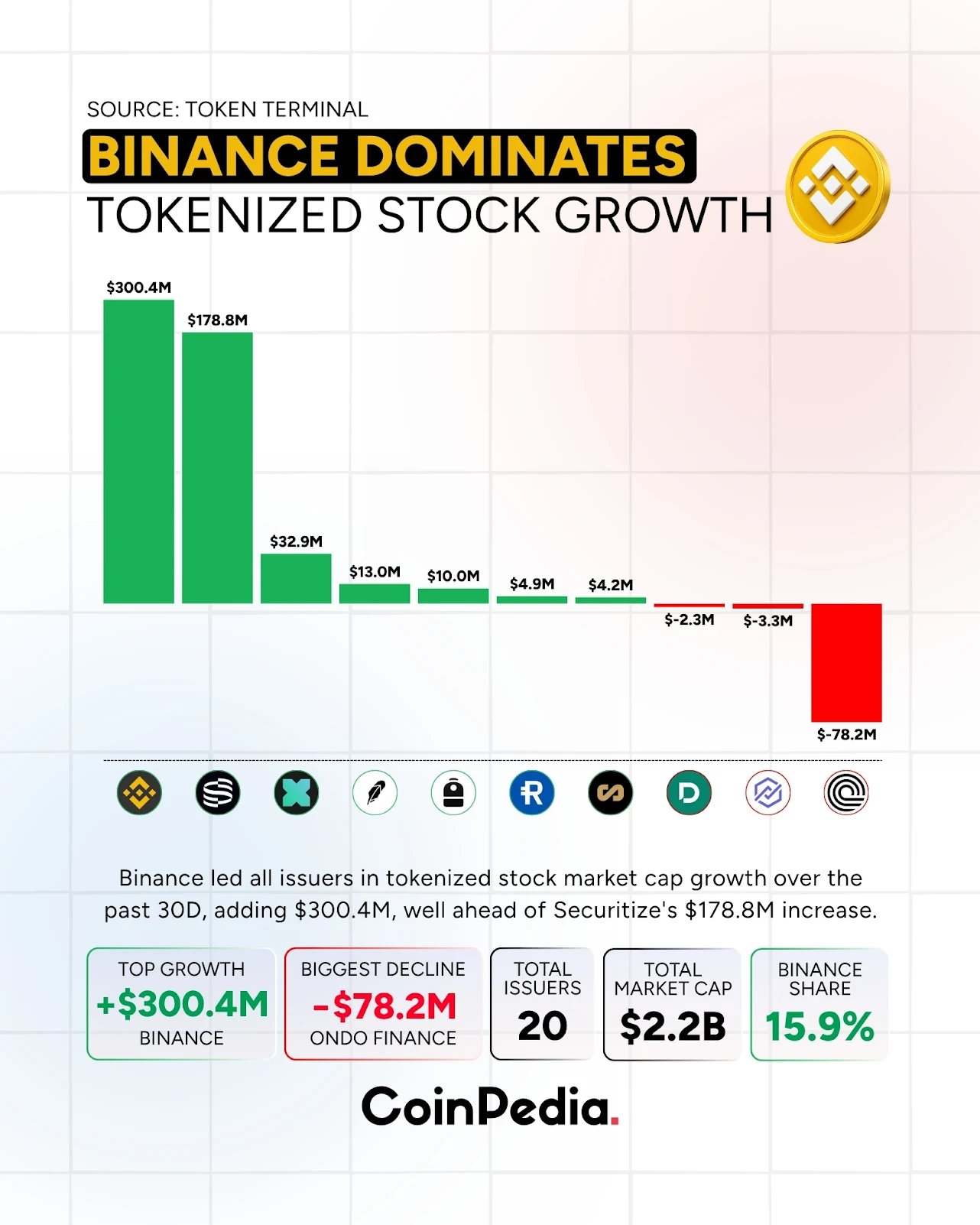
    #Tokenized stocks are gaining momentum and #Binance is setting the pace. +$300.4M market cap growth in 30 days, the highest among all issuers. The #RWA narrative is moving from hype to adoption. https://t.co/s0G6c02ccj

     0  0  335
    Original >
    Trend of BNB after release
     Extremely Bullish
    Binance leads the tokenized stocks market growth, with the RWA narrative shifting from hype to real-world adoption.
  • 空投龙 | 美股AI分析师 DeFi_Expert Educator B
     59.93K  @1YES_yes1

    DeFi's next stage, the competition is not about the trading entry point, but about who can create financial products In the past few years, DeFi's development has actually gone through several very distinct stages. The first stage solved the problem of: How assets are exchanged. With the emergence of DEXs, users for the first time could trade assets on-chain without relying on centralized platforms. The second stage solved the problem of: How assets generate yield. Mechanisms such as lending, staking, and liquidity mining have given previously dormant on-chain assets the ability to earn returns. But as the infrastructure gradually improves, the next stage's problem is emerging: Who can create new financial products? I think this is an important direction for future DeFi competition. In the past, users could only choose products already designed by platforms. Want to trade a certain asset? Wait for the platform to launch it. Want to earn a certain yield? Wait for the protocol to release a solution. The right to create financial products is largely held by a few protocols. However, a truly open financial system should not just let users use products. It should allow more participants to have the ability to create products. This is also a major reason why I am following @Hertzflow_xyz. It is not just a protocol that offers leveraged trading. It is more like trying to build an on-chain financial product production environment. Through: Pool Providing the market with liquidity foundation. Vault Allowing different strategies to be hosted and executed. Liquidity mechanisms Enabling funds to flow into more financial scenarios. Strategy space Allowing professional teams to explore new trading plays. The resulting system is not just a trading venue, but a framework that lets different roles jointly participate in financial innovation. Users can look for trading opportunities. LPs can provide capital and earn yields. Strategy teams can design new financial models. Communities can also explore more asset and market combinations. This actually differs a bit from traditional finance. In traditional finance, product design is usually done by institutions, while ordinary users are mostly participants. The biggest feature of on-chain finance is openness. In the future, more financial products may be created jointly by communities, strategy teams, and protocols. Of course, this path is not simple. An open financial system must face long‑term challenges such as liquidity depth, risk control, and liquidation mechanisms. But the direction itself is worth watching. Especially in the BNB Chain ecosystem, users and asset scale have always had an advantage. The truly important question in the next stage may not be whether there are more assets. Instead: How to make these assets generate more financial application scenarios. If Hertzflow can gradually完善 its ecosystem, the value it brings may be more than just a trading protocol. It could be an infrastructure layer that helps continuously create financial products on-chain. DeFi first stage made assets start to move. Second stage made assets start to generate returns. Third stage may belong to platforms that can create financial products. And Hertzflow is exploring exactly that direction. #bnbchain #BTC

     31  38  1.60K
    Original >
    Trend of BNB after release
     Extremely Bullish
    DeFi's next stage is competition in creating financial products, and Hertzflow is seen as a key infrastructure.
  • Nova C
     53.99K  @badattrading_

    Binance and its love for stickman is a huge foreshadowing, bullish

    Binance Intern D
     104.53K  @Binance_intern

    I will go on X and I haven't watch world cup https://t.co/ycQgDArROB

     40  19  11.19K
    Original >
    Trend of BNB after release
     Bullish
    Binance's actions are seen as a bullish signal, indicating a positive market trend.
  • OCT News Media Influencer C
     1.94K  @news_oct

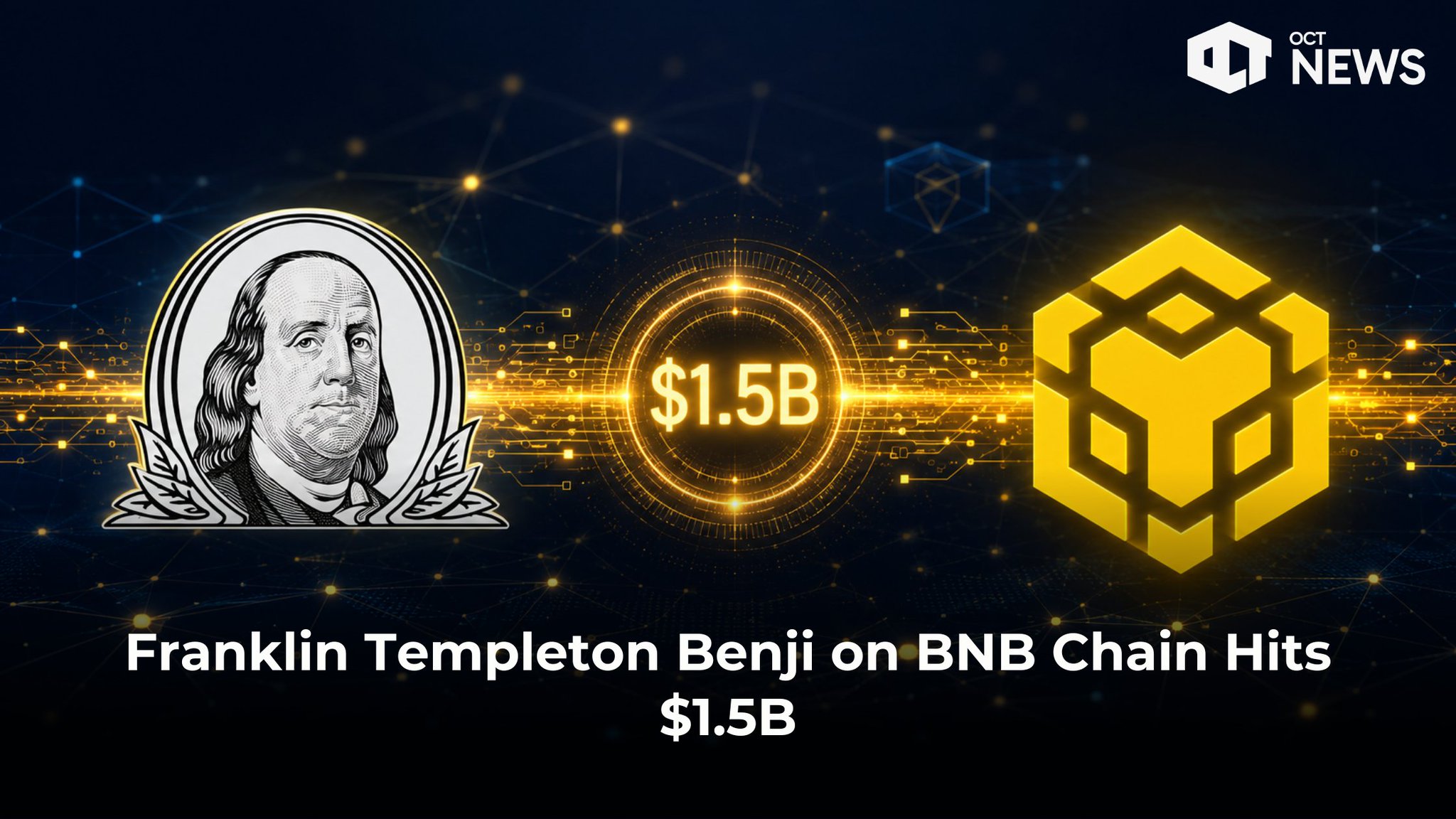
    Franklin Templeton Benji BNB Chain holdings hit $1.5B, making BNB the leading network for the asset manager’s tokenized products. Read more🔽 https://t.co/J5bYOacIL3 https://t.co/1Xu2Ra0KuP

    OCT News Media Influencer C
     1.94K  @news_oct

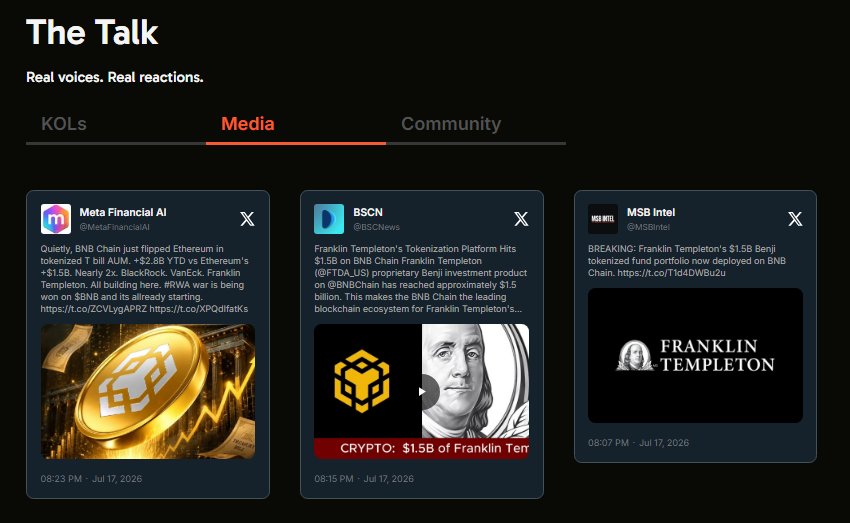
    Check key reactions on "The Talk"🔽 https://t.co/sM42pszQpd

     4  2  224
    Original >
    Trend of BNB after release
     Extremely Bullish
    Franklin Templeton Benji BNB Chain holdings hit $1.5B, making BNB the leading network for the asset manager’s tokenized products.
  • 🔸BΞRIT🔸 OnChain_Analyst Media B
     11.74K  @Berit1p

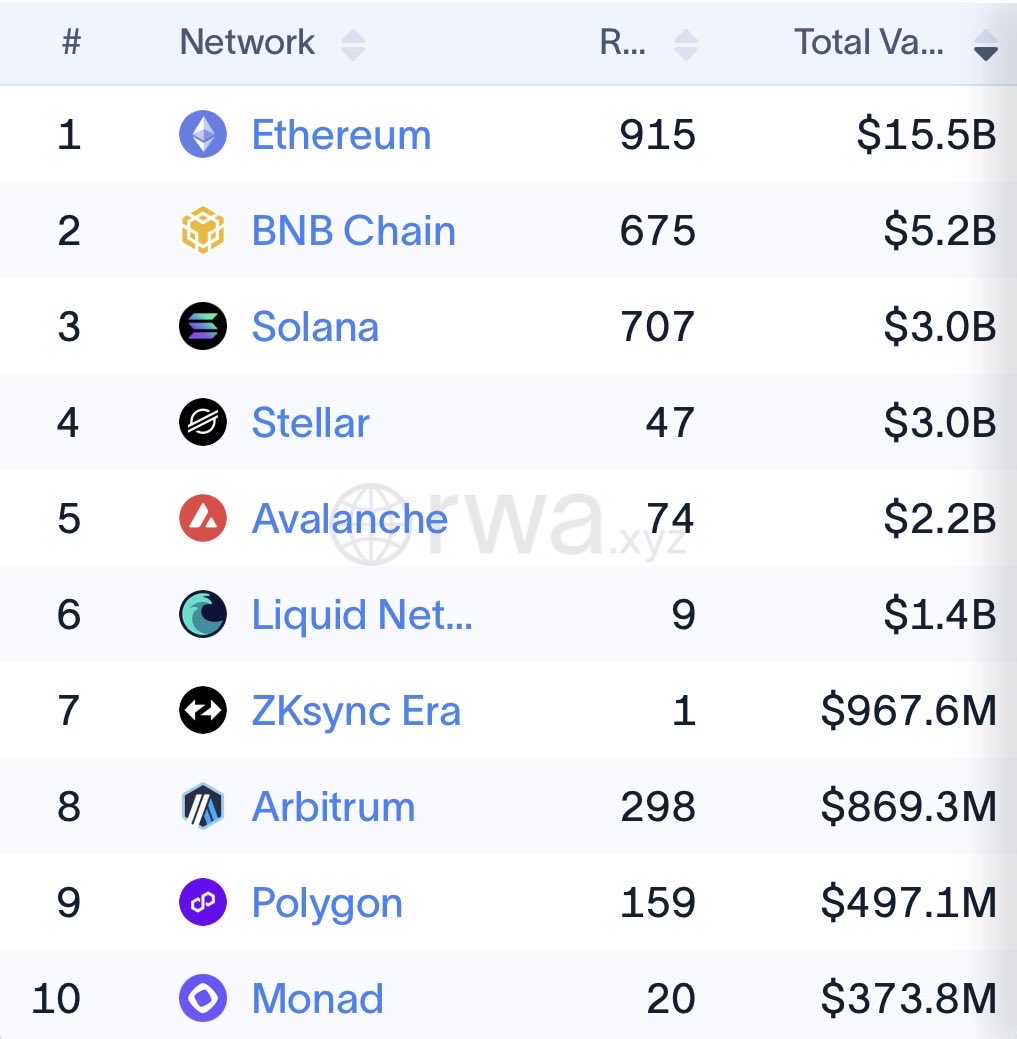
    from roughly $2b in RWA value on #BNB chain at the start of 2026.. to $5.2b today. @BNBCHAIN is making the RWA leaderboard look a little less one sided https://t.co/o0pqprMSaY

     6  0  309
    Original >
    Trend of BNB after release
     Bullish
    BNB Chain's RWA value grew to $5.2bn, ranking second on the leaderboard.
  • 吴说区块链 Media Educator D
     177.62K  @wublockchain12

    According to BNB Chain citing RWA xyz data, Franklin Templeton Benji investment products have assets on BNB Chain of approximately $1.5 billion, up about 1,226% over the past 30 days, representing 61.71% of the cross‑chain total size of the series; Stellar and Ethereum are about $583 million and $159 million respectively. Note that this is an update of asset size data, not a new partnership: the Franklin Templeton Benji technology platform announced integration with BNB Chain as early as September 2025 for issuing and managing tokenized funds and other on‑chain investment products. https://t.co/bXcXoWEbCn

     3  1  2.59K
    Original >
    Trend of BNB after release
     Neutral
    BNB Chain assets $1.5B, up 1,226% over 30 days.
  • Top 7 Crypto | Analytics & Alpha FA_Analyst OnChain_Analyst C
     151.54K  @top7ico

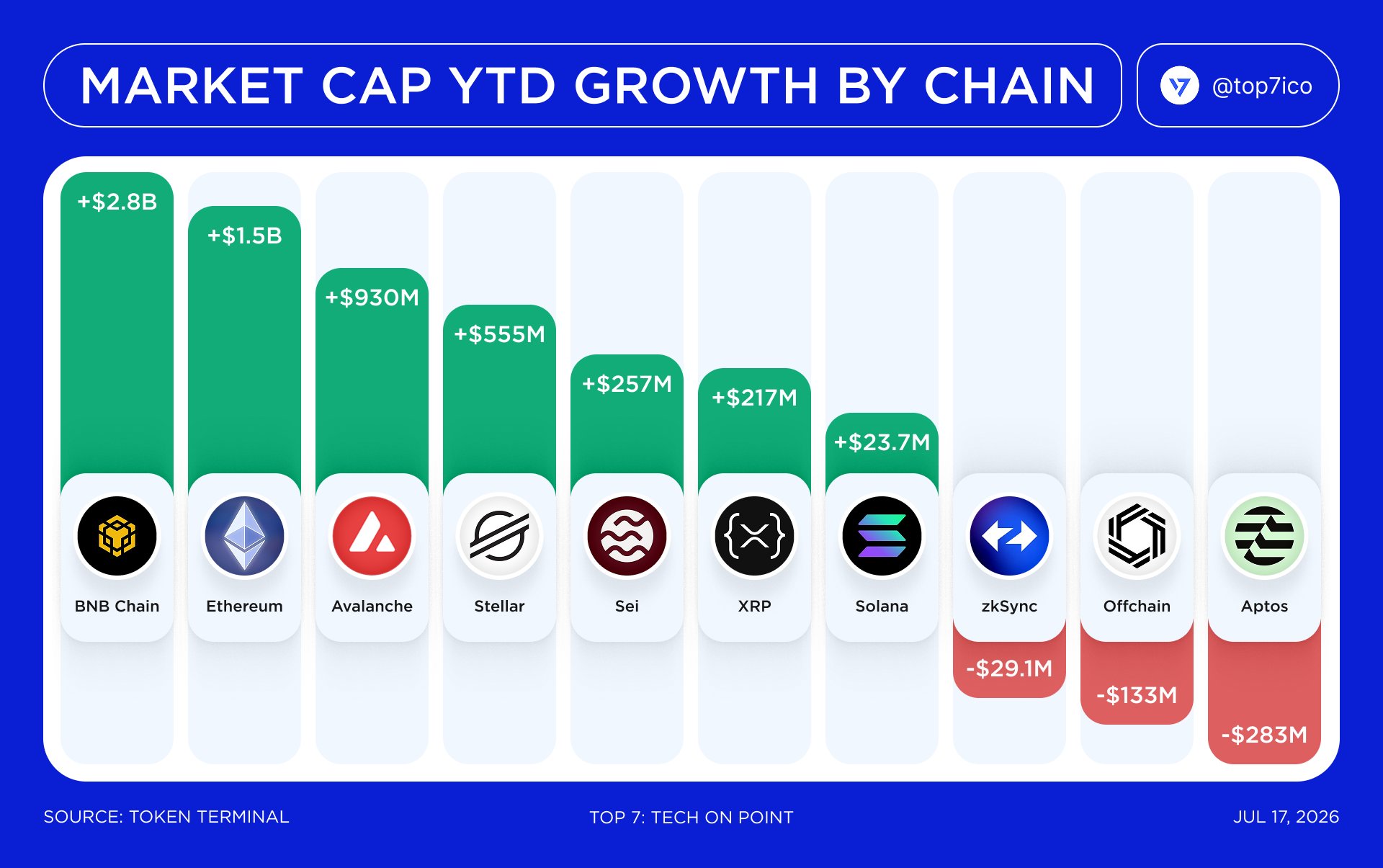
    Tokenized T-Bills: Market Cap YTD Growth by Chain The Treasury market onchain picked a surprising winner this year: BNB Chain added $2.8B in tokenized T-bills - nearly double Ethereum's $1.5B and more than the rest of the board combined. The old assumption that institutional paper lives on Ethereum while retail plays elsewhere is quietly inverting: Binance's ecosystem became the fastest-growing home for the most conservative asset in crypto. The Solana number is the tell worth sitting with. The chain that leads overall RWA net flows (+$989M last month) added just $23.7M in T-bills all year - its RWA boom is stocks, credit, and commodities, not government paper. Different chains are specializing: BNB and Ethereum absorb the yield trade, Solana takes the risk trade, Stellar and XRP keep their payments-adjacent niches. Data source 🔗 @tokenterminal

     7  0  4.28K
    Original >
    Trend of BNB after release
     Neutral
    BNB Chain leads YTD growth in the tokenized Treasury market, while chains show specialization trends in the RWA space.
  • BSCN Media C
     1.36M  @BSCNews

    BNB Chain (@BNBCHAIN) just hit a new all-time high for RWAs. TVL crosses $5,200,000,000, per @RWA_xyz https://t.co/xMq80N8ZQ5

    BNB Chain D
     3.93M  @BNBCHAIN

    $5,200,000,000+ A new TVL all-time high for RWAs on BNB Chain. Money moves on BNB Chain. https://t.co/IpAhfDGiXM

     59  10  13.07K
    Original >
    Trend of BNB after release
     Bullish
    BNB Chain's RWA TVL hits a historic high, exceeding $5.2 billion.