

According to reports from Wu, MYX Finance announced that to concentrate resources on the development of the V2 version, MYX V1 will be officially decommissioned on July 15. The staking and reward claim window for V1 will remain open for 7 days after the V1 shutdown, and will permanently close on July 22. MYX Finance advises users to manually claim rewards and withdraw remaining assets by accessing the V1 dashboard before July 22. The official emphasized that after the window closes, the team will be unable to assist in recovering any trapped or lost assets, and recommends users to migrate promptly. https://t.co/0ZJSItZCM0
شراء العملات المشفرة
بطاقة
تداول P2P
اشتر USDT عبر السوق
بطاقة الائتمان/الخصم
اشترِ العملات المشفرة باستخدام Visa أو Mastercard
الدفع من جهة خارجية
اشترِ العملات المشفرة عبر MoonPay و Simplex والمزيد
بطاقة بيتمارت
تعزيز قدرات حياتك في مجال العملات المشفرة
بطاقة مسبقة الدفع للعملات المشفرة
احصل على بطاقة ماستركارد صالحة للاستخدام فورًا
Rewards
السحب اليومي للحسابات الآجلة
فرصة ربح مضمونة بنسبة 100% مع التداولات اليومية
السحب اليومي لحساب فوري
اكسب 8888 USDT في الجوائز الكبرى
شحن رصيد الهاتف المحمول
شحن الرصيد بسهولة، عبر الإنترنت، وبأمان
Send
Send money globally, fast and secure
BitMart Mall
بث مباشر للعملات المشفرة
MYX Finance بيانات الأسعار المباشرة
سعر اليوم لـ MYX Finance هو $ 0.079 (MYX/USD). بقيمة سوقية تبلغ $ 30.98M USD. حجم التداول خلال 24 ساعة لـ $ 8.01M USD، تغير السعر خلال 24 ساعة بمقدار +0.00%، وإمداد متداول قدره 387.37M MYX.
MYX Finance MYX سجل الأسعار USD
تتبع سعر MYX Finance لليوم، و7 أيام، و30 يومًا، و90 يومًا
الفترة
تغير
التغير (%)
اليوم
$ 0
0.00%
7أيام
--
--
30أيام
--
--
90أيام
--
--
امتلك MYX الآن
اشترِ وبع MYX بسهولة وأمان على BitMart.
MYX Finance معلومات السوق
$ 0.079 مدى 24سا $ 0.079
أعلى مستوى على الإطلاق
$ 0
أدنى مستوى على الإطلاق
$ 0
تغير24سا
0.00%
حجم 24سا
$ 8,012,420.45
الإمداد المتداول
387.36M
MYX
القيمة السوقية
$ 30.98M
الحد الأقصى للإمداد
1.00B
MYX
القيمة السوقية المخففة بالكامل
$ 79.98M
التداول MYX
MYX Finance رؤى X

吴说区块链
Media
Educator
D
 177.6K @wublockchain12
 هابط بشدة
MYX V1 will be decommissioned on July 15, and rewards must be manually claimed before July 22.
 0
0
 1
1
 2.5K
2.5K
2026-07-09 09:17
اتجاه MYX بعد الإصدار
هابط
MYX V1 will be decommissioned on July 15, and rewards must be manually claimed before July 22.

The Boss 🦅
TA_Analyst
Influencer
B
88.5K @CryptoTheBossX صاعد
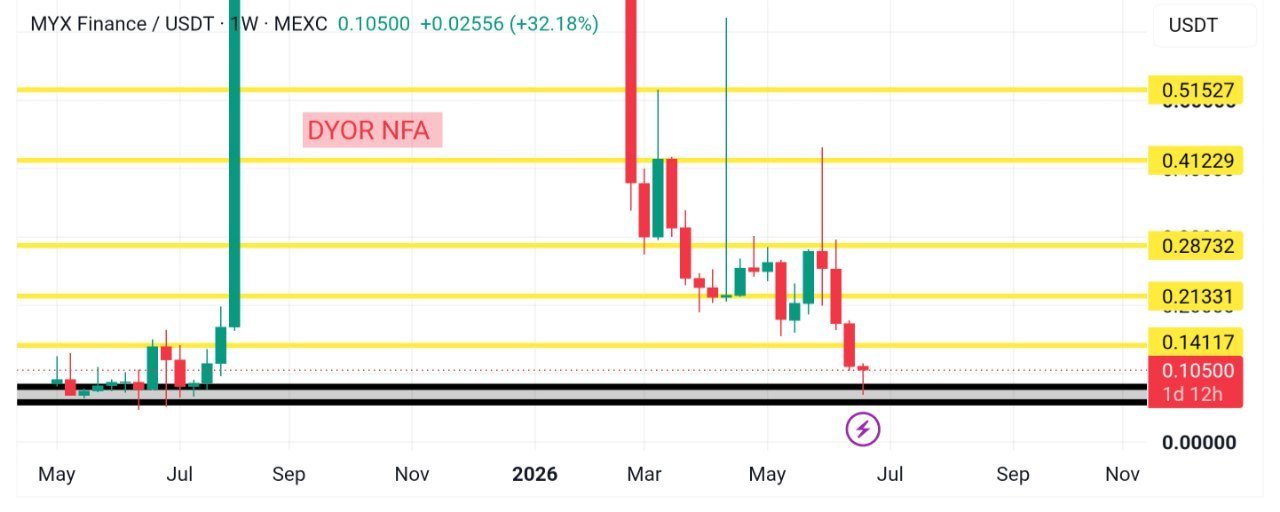
MYX finds support in the historical accumulation zone and rebounds, the coming weeks are critical.
🔷️ $MYX continues trading directly above the black accumulation zone that has historically acted as a major buyer area on this structure.
The yellow lines above represent the main resistance regions that bulls need to reclaim for momentum to return, while the black zone below remains the area currently being defended by long-term participants.
Unlike previous breakdown attempts, sellers have not managed to force a clean loss of this base yet. This makes the current reaction particularly important, as holding this region could become the foundation for a broader recovery phase.
Momentum remains weak in the short term, but this is exactly the type of structure where sentiment usually shifts before price action does.
If you've been following my previous $MYX analysis, you'll notice the market has now returned to the same major demand area discussed earlier, making the coming weeks one of the most important periods for this chart so far.
⚠️ Not financial advice.
#MYX #BTC #ETH #Crypto #Altcoins
 253
29
37.1K
253
29
37.1K
2026-06-27 12:27
اتجاه MYX بعد الإصدار
صاعد
MYX finds support in the historical accumulation zone and rebounds, the coming weeks are critical.

David Crypto Scam Hunter
OnChain_Analyst
Security_Expert
C
35.4K @CryptoScamHuntO هابط
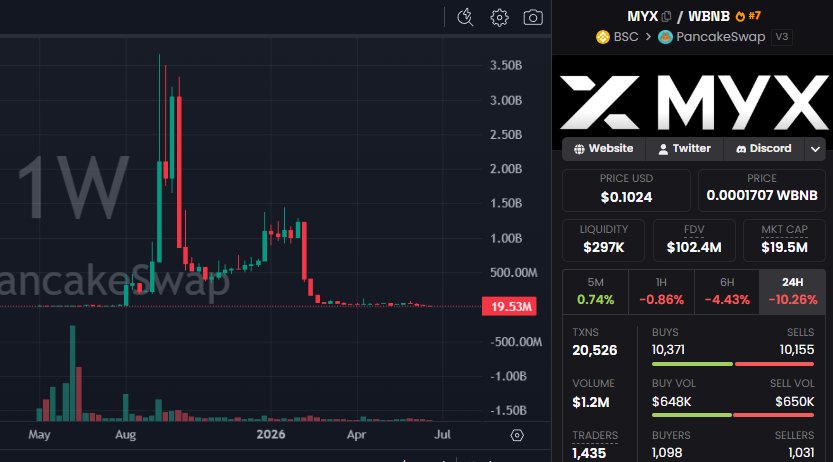
MYX FDV plummeted within months, warning of altcoin risks.
https://t.co/udAwssCPfk $MYX went from a $3.65B FDV to a $102M FDV ($19M MC) in just a few months! 🚨🚨🚨
So why should ppl buy "altcoins" and watch their charts nuked even worse than meme coin rug pulls? 🙃🙃🙃 https://t.co/GlHpYVfmIi
 21
2
7.7K
21
2
7.7K
2026-06-22 13:27
اتجاه MYX بعد الإصدار
هابط بشدة
MYX FDV plummeted within months, warning of altcoin risks.
توقع السعر
متى يكون الوقت المناسب لشراء MYX؟ هل يجب أن أشتري MYX أو أبيعه الآن؟
عند اتخاذ قرار ما إذا كان الوقت مناسبًا للشراء أو البيع MYX Finance (MYX)، من المهم أولاً أن تتوافق مع إستراتيجيتك الخاصة في التداول وملف المخاطر الخاص بك. غالبًا ما يفسر المستثمرون على المدى الطويل والمتداولون على المدى القصير ظروف السوق بشكل مختلف، لذا يجب أن يعكس قرارك نهجك الشخصي. استنادًا إلى أحدث تحليل تقني لمدة 4 ساعات لـ MYX، فإن إشارة التداول الحالية هي الحيازة.

توقعات Beacon
توقعات الأسعار الاحتمالية (الـ 24 ساعة القادمة)إخلاء مسؤولية توقعات Beacon
يتم تحليل نتائج البيانات المعروضة في هذه الصفحة استنادًا إلى بيانات التداول الفعلية (OHLCV) لزوج التداول المحدد إلى جانب المؤشرات التقنية المقابلة.
هذا التنبؤ هو منتج تقني تجريبي ويتم توفيره لأغراض مرجعية فقط. ولا يشكل نصيحة استثمارية. قد تؤثر الأحداث غير المتوقعة في العالم الحقيقي بشكل كبير في سلوك السوق. يجب على المتداولين اتخاذ القرارات بحذر.
هذا التنبؤ هو منتج تقني تجريبي ويتم توفيره لأغراض مرجعية فقط. ولا يشكل نصيحة استثمارية. قد تؤثر الأحداث غير المتوقعة في العالم الحقيقي بشكل كبير في سلوك السوق. يجب على المتداولين اتخاذ القرارات بحذر.
حول MYX Finance
MYX Finance (MYX) is a cryptocurrency launched in 2023and operates on the BNB Smart Chain (BEP20) platform. MYX Finance has a current supply of 1,000,000,000 with 387,369,090.4 in circulation. The last known price of MYX Finance is 0.07847315 USD and is down -3.63 over the last 24 hours. It is currently trading on 191 active market(s) with $15,241,541.46 traded over the last 24 hours. More information can be found at https://app.myx.finance.
اقرأ المزيد
الروابط الرسمية
وسائل التواصل الاجتماعي
مستكشف السلاسل
شراء MYX
التداول MYX