

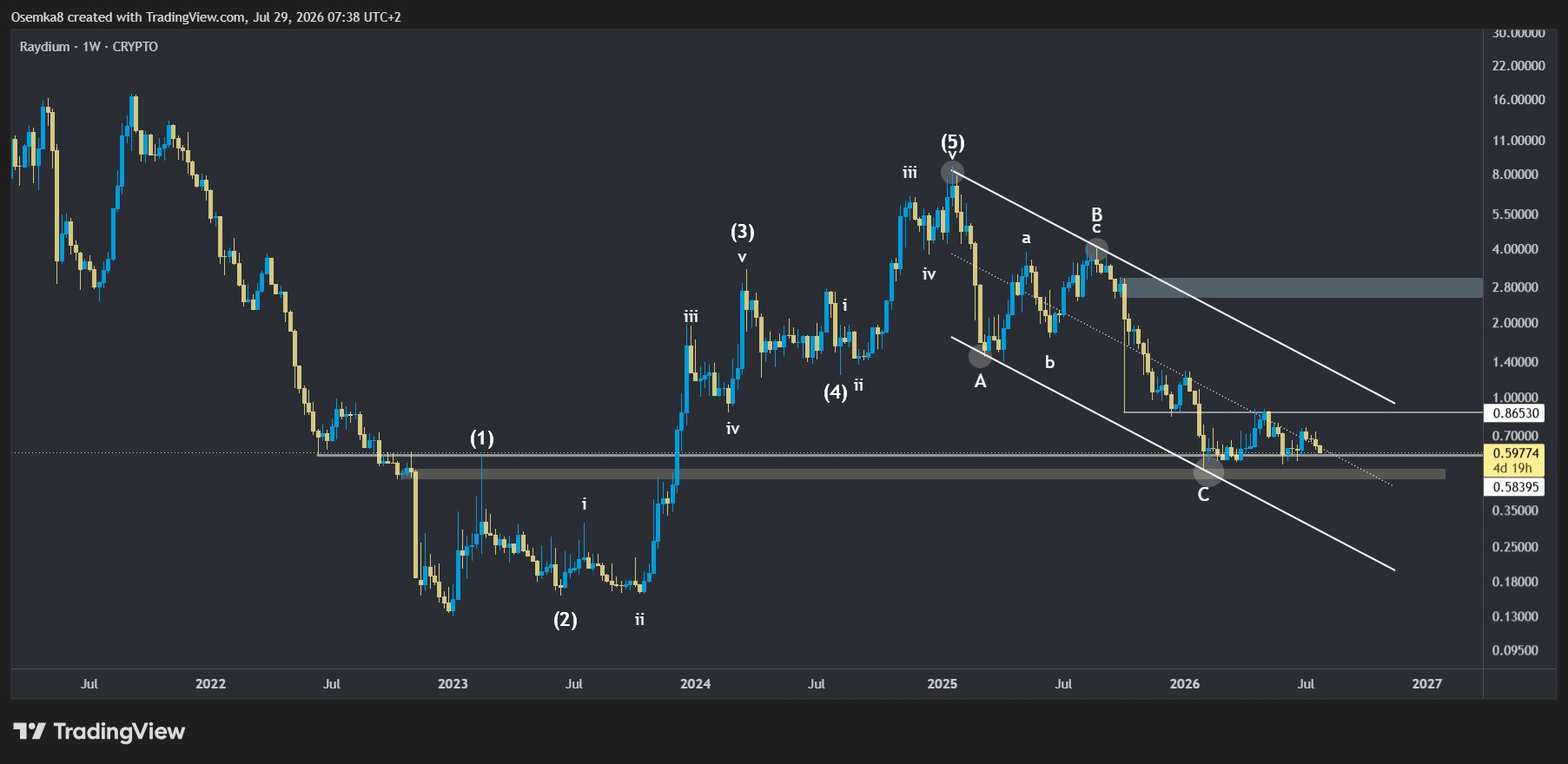
Two months later and $RAY is at exact same price. Talk about lack of volatility. Still view it as an opportunity
Day 179 of nothing but sideways https://t.co/PXME3bzIjy


 20.0K @Osemka8
 Two months later and $RAY is at exact same price. Talk about lack of volatility. Still view it as an opportunity
Day 179 of nothing but sideways https://t.co/PXME3bzIjy
20.0K @Osemka8 [ $RAY ]
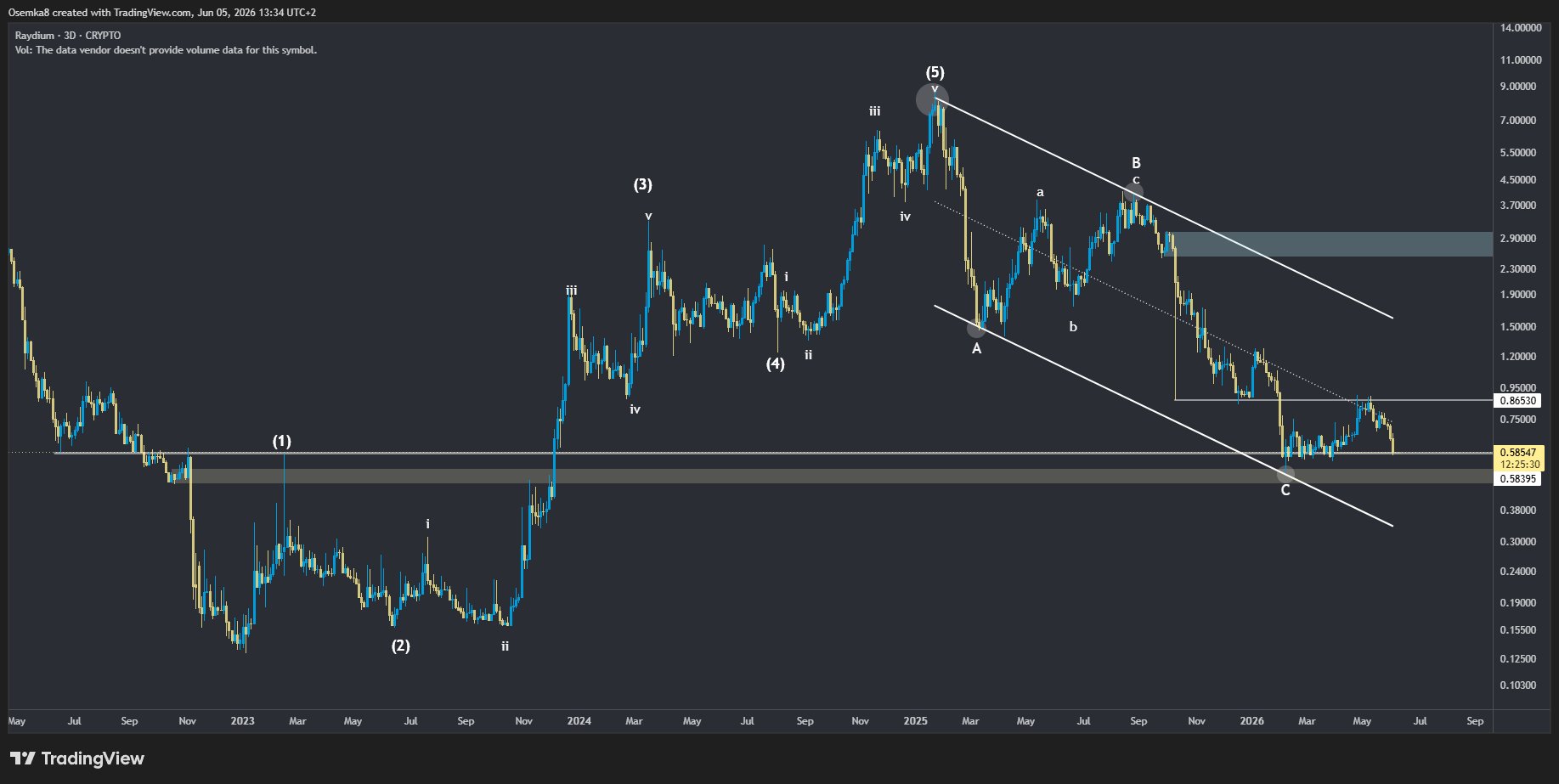
Raydium looks very decent here. Right on top of support where accumulation range was previously ongoing.
Looking from an unbiased perspective, this looks good to DCA into as invalidation is quite clear. https://t.co/UAIjUz6i48
 22
22
 2
2
 4.2K
4.2K
 350.3K @ColdBloodShill
 new Ray kinda cool, I think it'll do well, but pop numbers going to be disgusting
24
8
16.2K
 89.3K @CryptoTheBossX
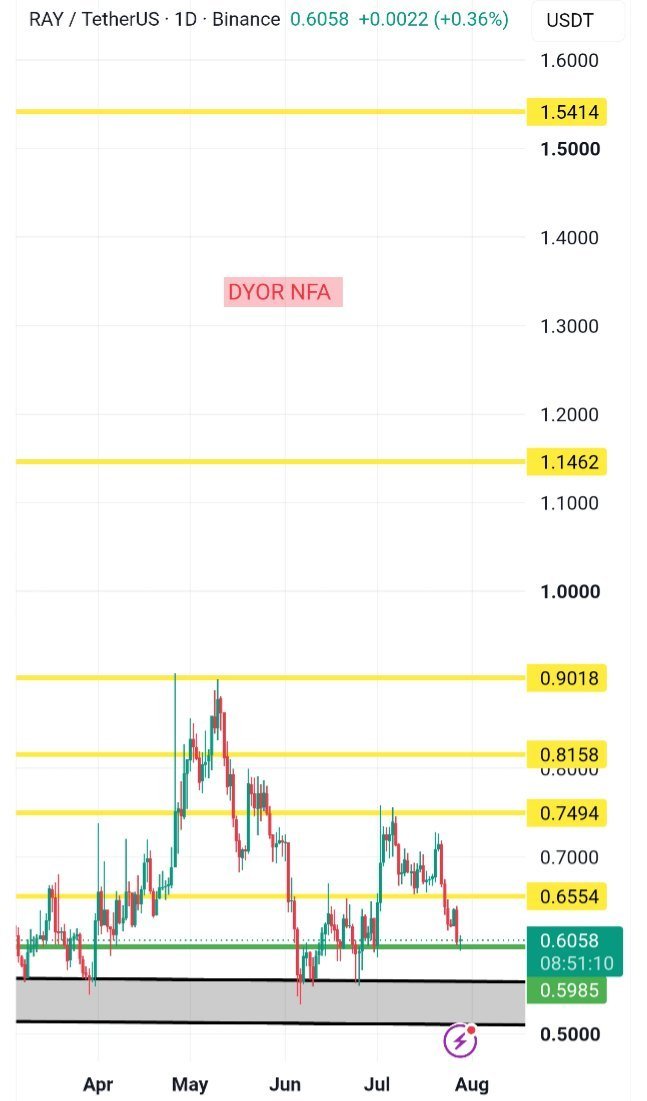
 🔷️ $RAY has returned to the same demand zone that has repeatedly prevented deeper sell-offs over the past few months.
📉 After another rejection from the mid-range resistance, price has rotated back toward support instead of breaking the broader structure. Despite the recent weakness, buyers continue to defend this area, keeping the established trading range intact.
⚖️ The next move will likely be determined by this support. Another successful defense could trigger a fresh rotation toward the upper boundaries of the range, while a confirmed loss of demand would shift the technical structure in favor of sellers. For now, patience is more valuable than anticipation.
⚠️ Not financial advice.
#RAY #Raydium #Crypto #DeFi
 98
27
23.3K
98
27
23.3K
