🇫🇷BREAKING: Porsche dealerships in France have begun accepting Bitcoin and cryptocurrency payments, marking another step forward in real-world crypto adoption. https://t.co/Dt9mQbBUfq
I think at this point Bitcoin seriously needs to consider implementing a dividend or something.
Otherwise people may never be interested enough to put their money into it again, and that would be bad.
Bitcoin is unbelievably cheap vs. gold right now.
Gold is up 165% against Bitcoin since December 2024, and gold bugs are doing victory laps in their bunkers, surrounded by canned beans and commemorative coins.
Here is what the actual data says.
Gold priced in Bitcoin is down 99.9994% since 2010.
We know this because Bitcoin has been an explosive asset and the early years make this have a massive skew.
The recent rally is a rounding error on a 16-year funeral.
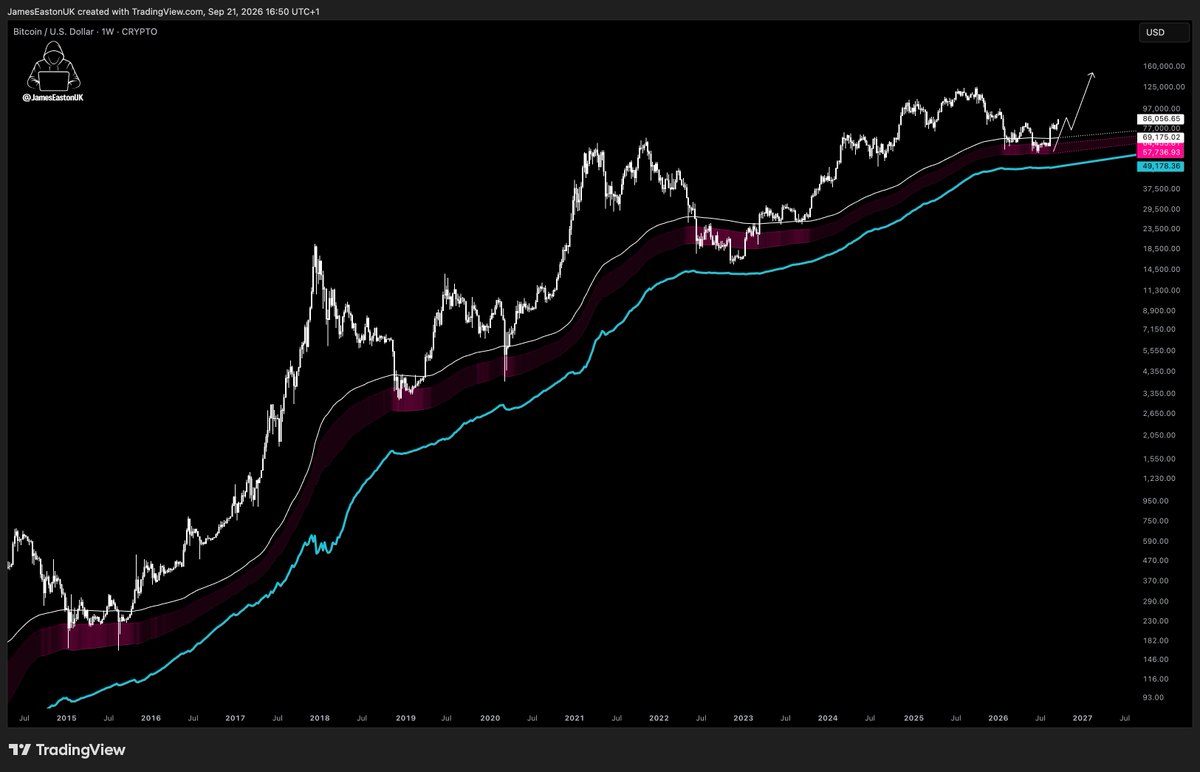
BTC/Gold now sits 76% below its power law trendline (R² = 0.95).
That is a -1.9 sigma event, in the 0.8th percentile of every trading day in Bitcoin's history.
February's print was the deepest deviation EVER recorded, including 2010, when Bitcoin cost less than the bus fare to your storage unit full of silver.
For reference, the legendary bottoms:
2015 bear low: -49% below trend → +176% in 12 months
COVID crash: -48% → +1,087% in 12 months
FTX bottom: -54% → +159% in 12 months
We are 22 points DEEPER than the worst day of FTX contagion.
Mean reversion to trend at today's gold price implies $256,000 Bitcoin.
Gold doesn't have to fall a single dollar.
Bitcoin just has to do what it has done after every single -1.5 sigma reading in history:
All five episodes, all resolved higher within 12 months, 100% win rate.
but sure. The rock is winning. Enjoy the beans.
Bitcoin (BTC) is a digital asset and a payment system invented by Satoshi Nakamoto who published a related paper in 2008 and released it as open-source software in 2009. The system featured as peer-to-peer; users can transact directly without an intermediary. Transactions are verified by network nodes and recorded in a public distributed ledger called the blockchain. The ledger uses bitcoin as its unit of account. The system works without a central repository or single administrator, which has led the U.S. Treasury to categorize bitcoin as a decentralized virtual currency. Bitcoin is often called the first cryptocurrency, although prior systems existed. Bitcoin is more correctly described as the first decentralized digital currency. It is the largest of its kind in terms of total market value by now.