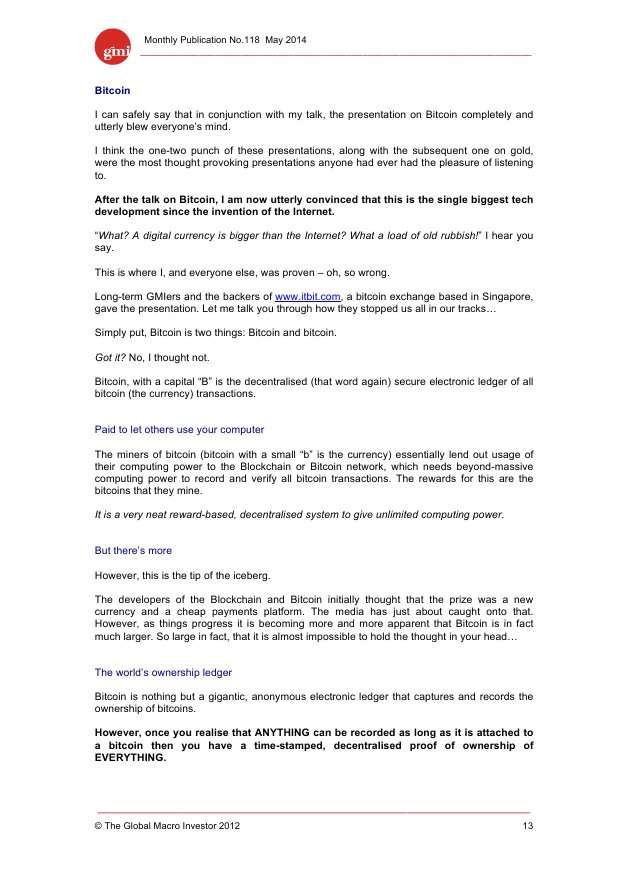
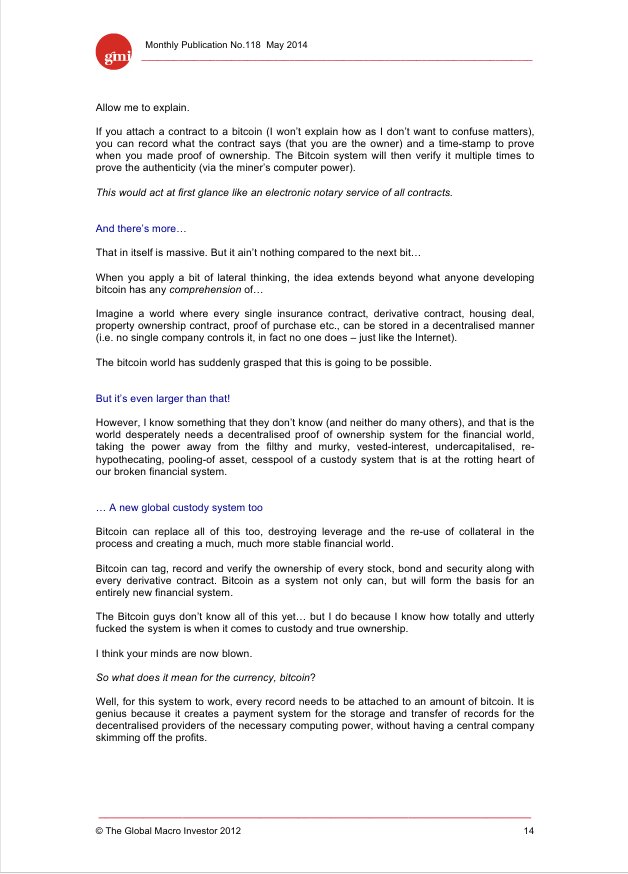
Look what I dug up... the GMI Monthly from May 2014.
We'd just held the first ever GMI Round Table, and a couple of members who'd backed a Bitcoin exchange in Singapore got up to talk. I was expecting something about payments. Instead they completely blew my mind. I went back to my desk and wrote that if you could record anything on an onchain ledger you'd have proof of ownership of everything... every insurance contract, every housing deal, every stock and bond...
At the time that sounded ludicrous. Putting a stock on a blockchain felt like science fiction.
What I understand now is this is far far far bigger than that. Agents are about to become the most active participants in the economy, and the only thing they can read, verify and trade is a token. So everything they need has to become one... money, identity, permissions, data, compute, political opinions, beliefs, information itself...
Literally everything will be a token.