Krypto kaufen
Karte
P2P-Handel
USDT über Marketplace kaufen
Kredit-/Debitkarte
Kaufen Sie Kryptowährungen mit Visa oder Mastercard
Zahlung durch Dritte
Kaufen Sie Krypto über MoonPay, Simplex und mehr.
BitMart-Karte
Stärken Sie Ihr Krypto-Leben
Krypto-Prepaid-Karte
Erhalten Sie sofort eine Mastercard, die Sie verwenden können
Handeln
USDⓈ-M
Verwendung von USDⓈ als Sicherheit
COIN-M
Coin selbst als Sicherheit einsetzen
TradFi
Handel mit Metallen, Aktien und Devisen aus einer Hand
Demo-Handel
Erfahren Sie, wie Sie ohne Risiko handeln können
Futures-Übersicht
Die zentrale Plattform für alles rund um Futures
Futures King
Preispool in Höhe von 478.000 USDT
Wachsen
Earn-Übersicht
Mit ungenutzten Assets mühelos verdienen
Ersparnisse
Zinsen mit Beständen verdienen
Staking
Einfaches Staking, hohe Prämien.
Vermögensverwaltung
ermehren Sie Ihr Vermögen mit einem erstklassigen Asset-Team
RWA
Halten Sie BMRUSD, nutzen Sie den Ertrag
Exklusiv für VIP
Stabiles Verdienen für VIP-Benutzer
Rewards
Prämienzentrale
Entdecken Sie exklusive Belohnungen im Wert von bis zu 14.000 USDT
LaunchPrime
Eine Plattform zur Einführung von Token und NFT
Partnerprogramm
Melden Sie sich an, um hohe Provisionen zu verdienen
Powerdrop
Die Airdrop-Lösung der nächsten Generation ist LIVE!
Veranstaltungszentrale
Der zentrale Hub für alle Geschäftsabläufe
Futures Tagesverlosung
100% Gewinnchance bei täglichen Trades
Spot-Tagesziehung
Gewinnen Sie 8.888 USDT an Hauptpreisen insgesamt
Staking zur Stimmabgabe
Verdienen Sie Airdrops durch Abstimmung
Institution
Professionelle und exklusive Services
VIP
Exklusive Rewards freischalten
Academy
Machen Sie sich schnell mit dem Handel und der Blockchain vertraut
BitMart-Praktikum
Beginnen Sie hier Ihre Krypto-Karriere
BitMart Travel
Weltweite Reisedienstleistungen aus einer Hand
Mobiles Aufladen
Laden Sie Mobiltelefone einfach, online und sicher auf.
Send
Send money globally, fast and secure
BitMart Mall
Leben mit Krypto

NVIDIA (Derivatives) (NVDA)
$ 222.19 (NVDA/USD)
0.80%
24H
NVIDIA (Derivatives) NVDA Preisverlauf USD
Verfolgen Sie den Preis von NVIDIA (Derivatives) für heute, 7 Tage, 30 Tage und 90 Tage
Zeitraum
Ändern
Veränderung (%)
Heute
$ 1.77
0.80%
7Tage
$ 4.11
1.88%
30Tage
$ 3.48
1.59%
90Tage
$ 21.86
10.90%
Besitzen Sie NVDA jetzt
Kaufen und verkaufen Sie NVDA einfach und sicher auf BitMart.
NVIDIA (Derivatives) Marktinformationen
$ 218.58 24-Std.-Bereich $ 222.56
Allzeithoch
$ 240.56
Allzeittief
$ 163.08
24-Std.-Veränderung
0.80%
Menge 24 Std.
$ 407,909.34
Zirkulierendes Angebot
0.00
NVDA
Marktobergrenze
$ 0
Nettomenge
--
Vollständig verwässerte Marktobergrenze
$ 0
Handel NVDA
Verdienen
Setzen Sie Ihre ungenutzten Kryptowährungen ein und erzielen Sie passives Einkommen durch Ersparnisse, Staking und mehr.
NVIDIA (Derivatives) X Insight

SimpleFarmer
Founder
NFT_Expert
B
 15.4K @OxSimpleFarmer
 Extrem bullisch
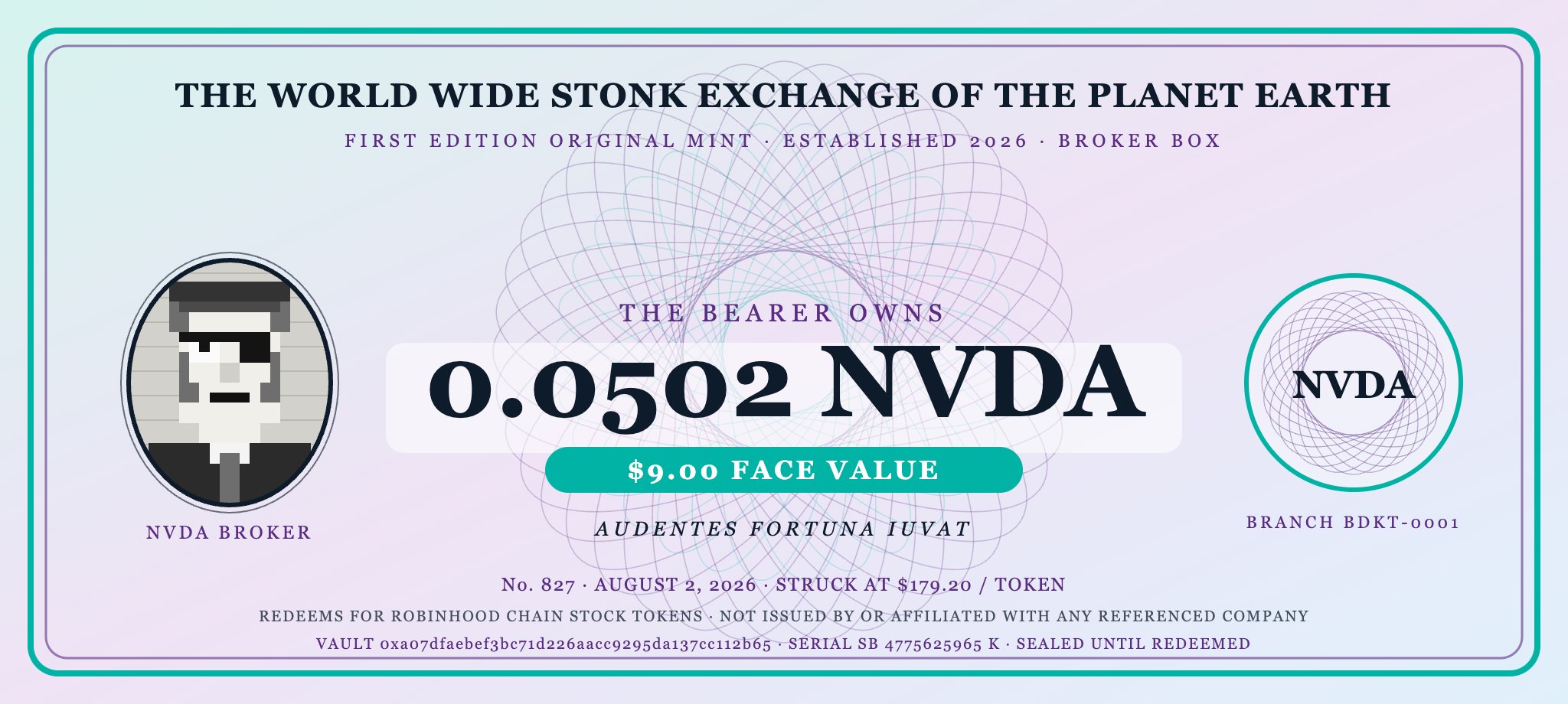
Sending tokenized NVDA via email without a wallet, praised as an excellent onboarding and savings tool for beginners.

web3gatsby.eth 🦍 D
7.1K @web3gatsby I just tested sending some tokenized $NVDA through the Stonk Brokers certificate counter directly to my wife via email for her to claim without the need of a wallet of any sort. This is an incredible onboarding tool for normies and for creating a email savings account.
Alternatively you can fill an email with a bunch of these periodically and give access to that email to your kids when they turn 18, or to anyone for that matter!
Gud tec. Stonks
 89
89
 15
15
 4.5K
4.5K
2026-08-02 02:57
Trend von NVDA nach Veröffentlichung
Extrem bullisch
Sending tokenized NVDA via email without a wallet, praised as an excellent onboarding and savings tool for beginners.

Jim Liu
FA_Analyst
Researcher
S
34.4K @jiahanjimliu Neutral
NVDA Kyber delay, revenue impacted by single‑digit figures
$NVDA: Kyber Delays?
Kyber is the rack architecture for VR300, not the current release of VR200 which will use the Oberon racks.
I appreciate @Aaronwei3n for sticking to his guns on Kyber delay rumors. Nvidia will not announce until it has to but Aaron is boots on the ground and seeing the signs now already due to orthogonal midplane difficulty.
Note there is nothing wrong with state of the art GPU system level delays as that is normal with such a complex system. Aaron himself states single digit percentage impacts to revenue for $NVDA. Suppliers may get impacted more majorly.
Interest to $IREN investors is that we will need 600kW rack density and 800V DC power distribution system. @FransBakker9812 for viz.
Not that $INV is not the provider of two stage cooling for Kyber but rather Asia Vital Components (3017 TT) and Cooler Master. @MarkosAAIG @MB_Hogan for viz.
Jim Liu
FA_Analyst
Researcher
S
34.4K @jiahanjimliu Nvidia has denied but I believe Aaron and @SemiAnalysis_ on this one. https://t.co/G8pUMYSmL6
28
5
11.6K
2026-07-22 05:27
Trend von NVDA nach Veröffentlichung
Neutral
NVDA Kyber delay, revenue impacted by single‑digit figures

materkel.gwei 🦇🔊
DeFi_Expert
Tokenomics_Expert
B
6.2K @materkel Extrem bullisch
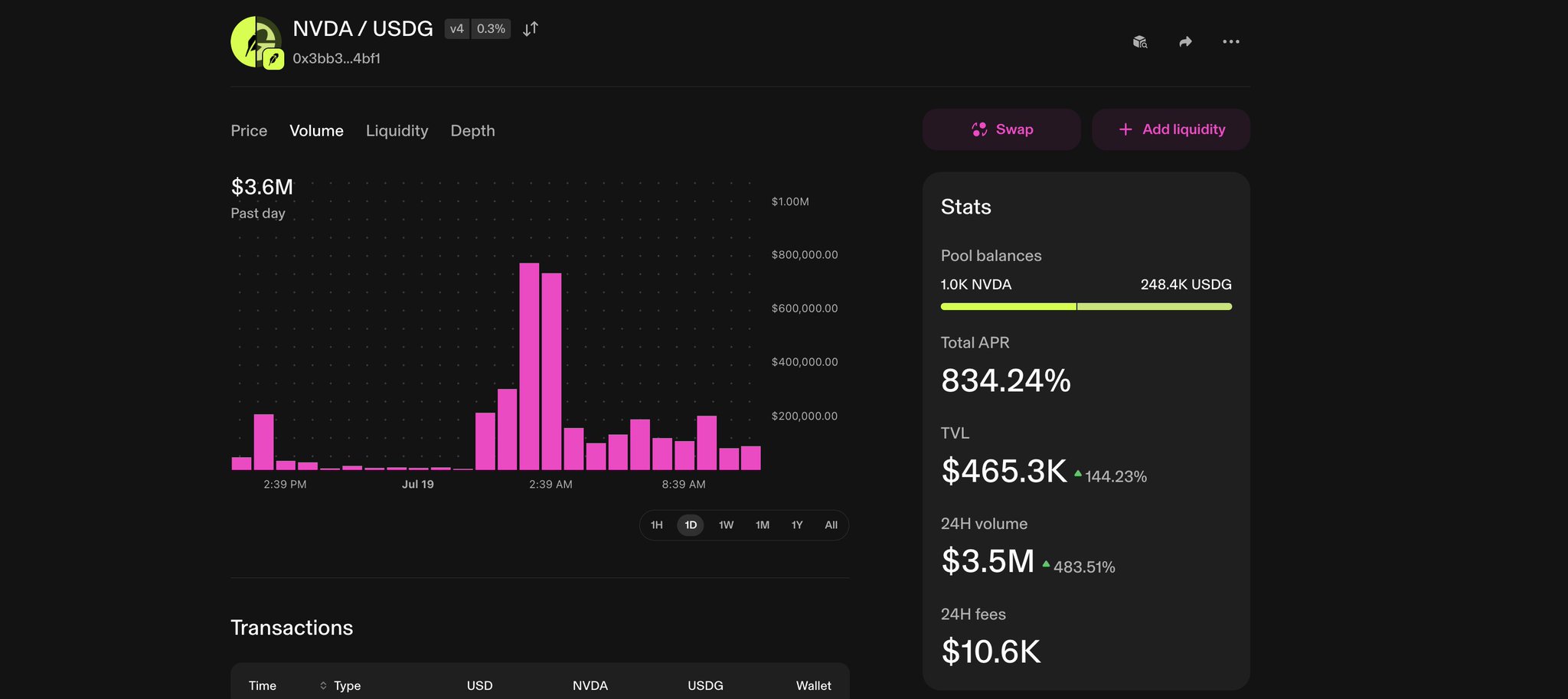
NVDA/USDG Uniswap V4 pool becomes the largest RWA pool on the Robinhood chain, with a huge increase in trading volume and TVL.

Hayden Adams 🦄 D
1.7M @haydenzadams Update: the numbers are going up quickly
the largest rwa pool on Robinhood chain is now a NVIDA/USDG Uniswap v4 pool with $3.5m in daily trading volume https://t.co/63nreUxh0T
 819
132
202.4K
819
132
202.4K
2026-07-20 19:47
Trend von NVDA nach Veröffentlichung
Extrem bullisch
NVDA/USDG Uniswap V4 pool becomes the largest RWA pool on the Robinhood chain, with a huge increase in trading volume and TVL.
Preisprognose
Wann ist ein guter Zeitpunkt, um NVDA zu kaufen? Soll ich NVDA jetzt kaufen oder verkaufen?
Bei der Entscheidung, ob es ein guter Zeitpunkt ist, NVIDIA (Derivatives) (NVDA) zu kaufen oder zu verkaufen, ist es wichtig, sich zunächst an der eigenen Handelsstrategie und Ihrem Risikoprofil zu orientieren. Langfristig orientierte Anleger und kurzfristig orientierte Trader interpretieren Marktbedingungen oft unterschiedlich, daher sollte Ihre Entscheidung Ihre persönliche Herangehensweise widerspiegeln. Laut der neuesten vierstündigen technischen Analyse von NVDA lautet das aktuelle Handelssignal Halten. Laut der neuesten eintägigen technischen Analyse von NVDA lautet das aktuelle Signal Halten.

Beacon Vorhersage
Probabilistische Preisprognose (nächste 24 Stunden)Haftungsausschluss für Beacon-Vorhersagen
Die auf dieser Seite angezeigten Datenergebnisse werden basierend auf tatsächlichen Handelsdaten (OHLCV) des ausgewählten Handelspaares und den entsprechenden technischen Indikatoren analysiert.
Diese Prognose ist ein experimentelles technisches Produkt und wird lediglich zu Informationszwecken angegeben. Dies stellt keine Anlageberatung dar. Unerwartete Ereignisse in der realen Welt können erhebliche Auswirkungen auf das Marktverhalten haben. Händler sollten Entscheidungen mit Vorsicht treffen.
Diese Prognose ist ein experimentelles technisches Produkt und wird lediglich zu Informationszwecken angegeben. Dies stellt keine Anlageberatung dar. Unerwartete Ereignisse in der realen Welt können erhebliche Auswirkungen auf das Marktverhalten haben. Händler sollten Entscheidungen mit Vorsicht treffen.
Über NVIDIA (Derivatives)
NVIDIA (Derivatives) (NVDA) is a cryptocurrency . NVIDIA (Derivatives) has a current supply of 0. The last known price of NVIDIA (Derivatives) is 215.41020014 USD and is down -1.22 over the last 24 hours. It is currently trading on 106 active market(s) with $1,386,468.91 traded over the last 24 hours.
Mehr lesen