

The Palvatar - My video AI is kinda creepy but also pretty good...! You get a daily update from "me" on everything that matters. https://t.co/ShT478fgZz
Rewards
Futures Daily Draw
100% Chance To Win With Daily Trades
Spot Daily Draw
Win 8,888 USDT In Grand Prizes
Mobile Top-Up
Top up mobiles easily, online, secure
Send
Send money globally, fast and secure
BitMart Mall
Live on crypto
Bullish Trump Coin BTC Price History USD
Track the price of Bullish Trump Coin for today, 7 days, 30 days and 90 days
Period
Change
Change (%)
Today
$ 902.53
1.12%
7days
$ 4,121.31
5.32%
30days
$ 16,526.48
25.43%
90days
$ 15,791.75
24.03%
Own BTC Now
Buy and sell BTC easily and securely on BitMart.
Bullish Trump Coin Market Information
$ 80,478.13 24h Range $ 81,706.76
All time high
$ 126,163.71
All time low
$ 631.82
24h Change
1.01%
24h Vol
$ 203,402,597.96
Circulating supply
20.08M
BTC
Market cap
$ 1.64T
Max supply
21.00M
BTC
Fully diluted market cap
$ 1.71T
Trade BTC
Bullish Trump Coin X Insight

Raoul Pal
FA_Analyst
Influencer
C
 1.5M @RaoulGMI
 Bullish
Bitcoin is considered to be at a historic inflection point, with rare signals indicating an uptrend, and buying the dip is recommended.

Real Vision D
393.5K @RealVision Palvatar changes it up this week. Instead of the usual roundup, one idea gets the full treatment.
An Alpha member is calling this Bitcoin's inflection point. His case rests on a signal that's only fired five times since 2012, and on what price did after every single one.
He's put a number on the odds of a new low. It's low enough that he's treating any dip from here as the entry.
 1
1
 3
3
 7.3K
7.3K
2026-09-11 00:56
Trend of BTC after release
Bullish
Bitcoin is considered to be at a historic inflection point, with rare signals indicating an uptrend, and buying the dip is recommended.
Raoul Pal
FA_Analyst
Influencer
C
1.5M @RaoulGMI Extremely Bullish
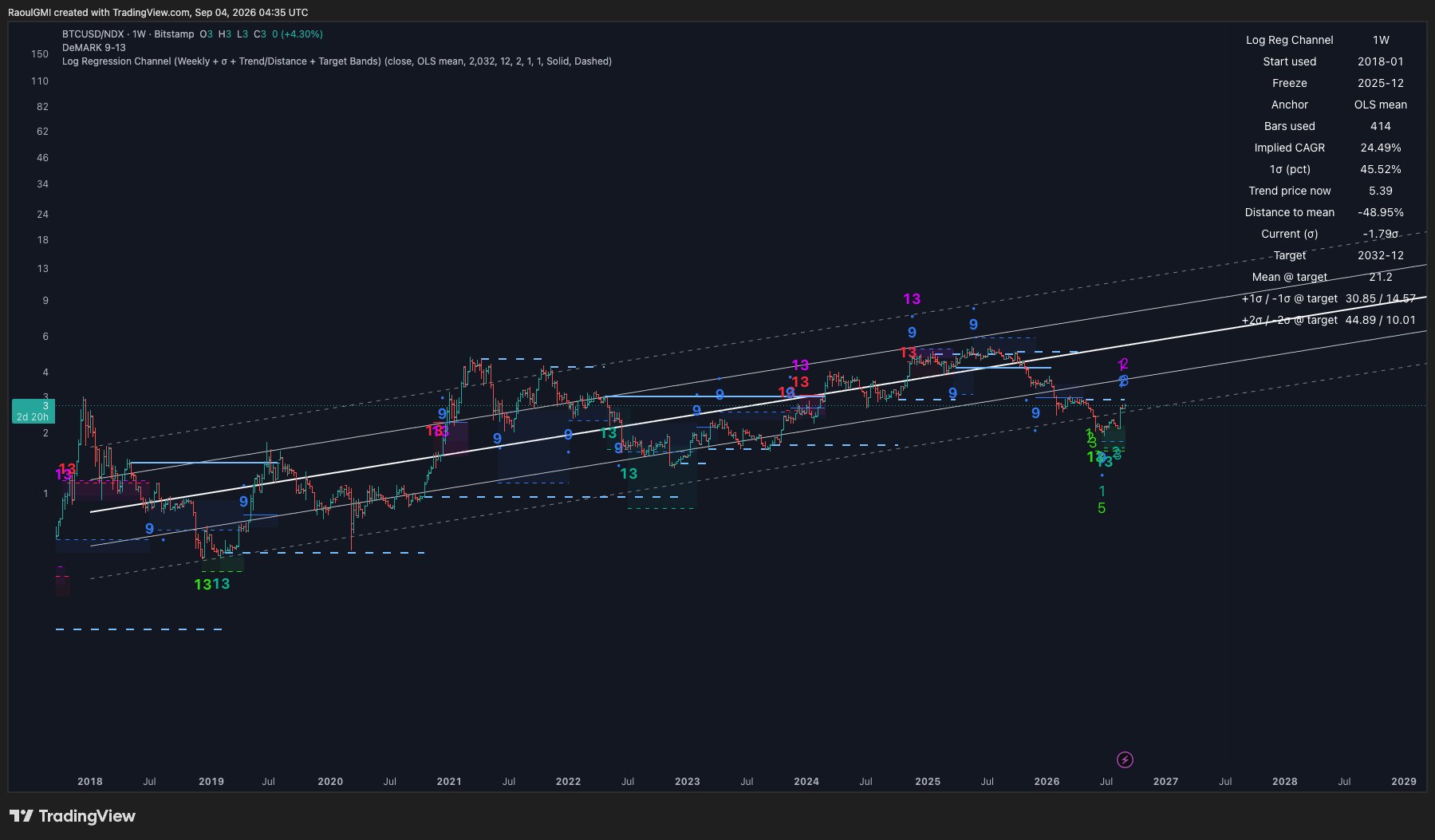
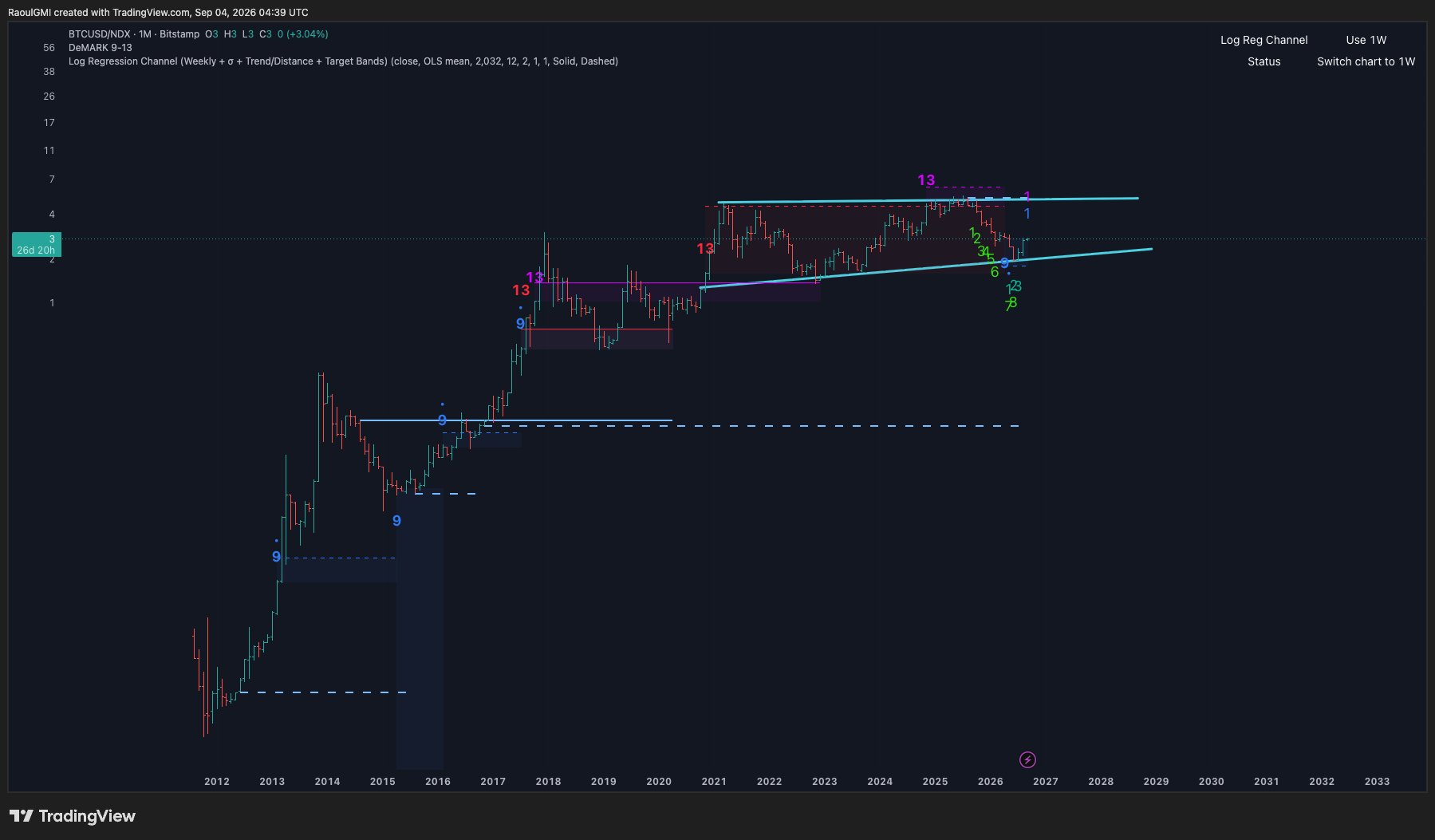
RaoulGMI is bullish on BTC outperforming NDX over the next 24 months, confirmed by DeMark.
I still think this is the trade of the next 24 months...NDX vs NDX. Im long both but crypto has, and will, outperform over time, in my opinion... and a double DeMark confirmation on monthly and weekly helps... https://t.co/oAkJ7eW2je
 7
4
6.6K
7
4
6.6K
2026-09-04 04:51
Trend of BTC after release
Extremely Bullish
RaoulGMI is bullish on BTC outperforming NDX over the next 24 months, confirmed by DeMark.
Raoul Pal
FA_Analyst
Influencer
C
1.5M @RaoulGMI Extremely Bullish
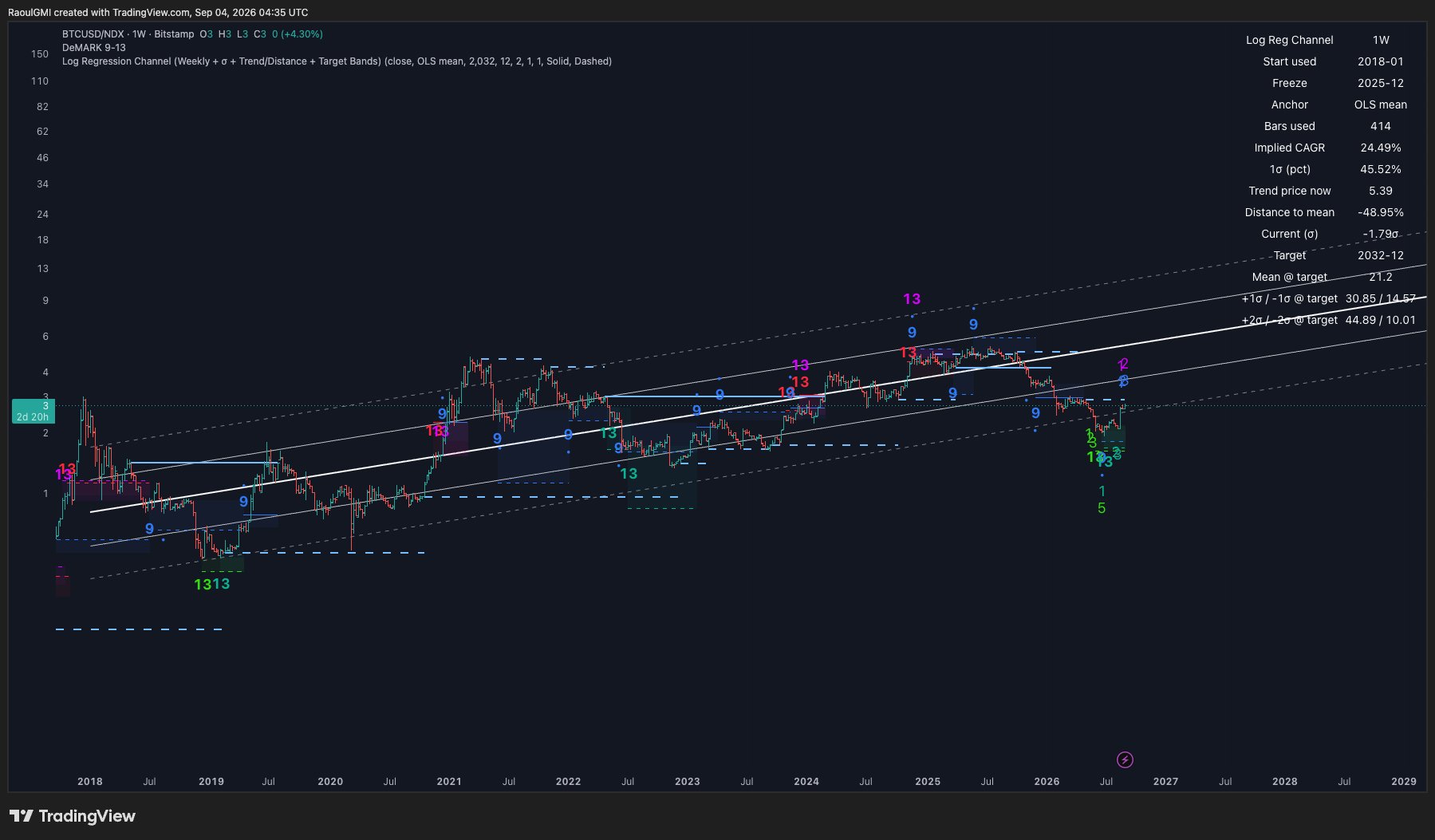
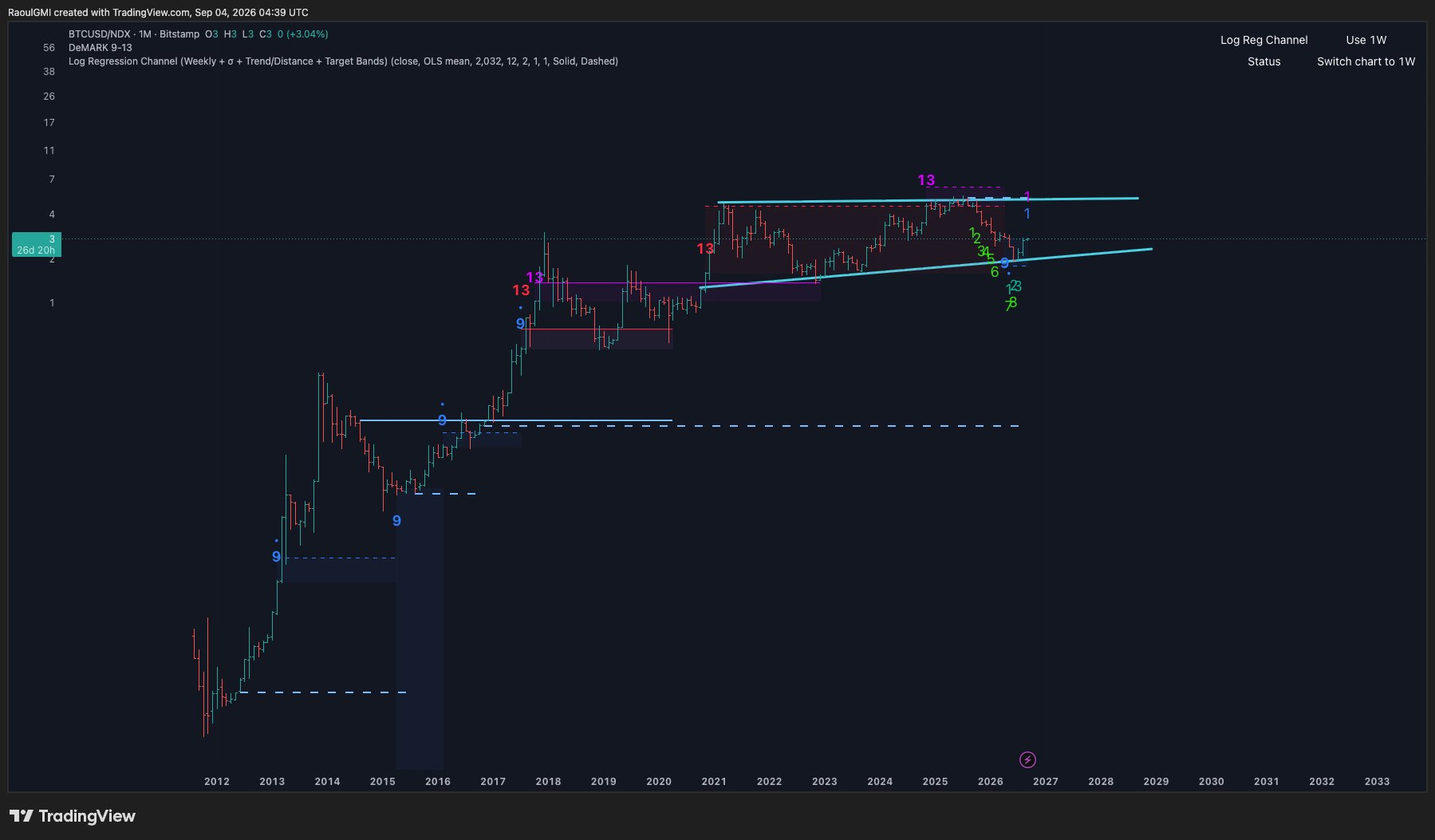
The author believes that cryptocurrency will outperform the broader market in the next 24 months, with the Bitcoin versus Nasdaq chart showing a strong upward trend.
I still think this is the trade of the next 24 months...MDX vs NDX. Im long both but crypto has, and will, outperform over time, in my opinion... and a double DeMark confirmation on monthly and weekly helps... https://t.co/IDpWrFRHd3
 2
0
4.2K
2
0
4.2K
2026-09-04 04:41
Trend of BTC after release
Extremely Bullish
The author believes that cryptocurrency will outperform the broader market in the next 24 months, with the Bitcoin versus Nasdaq chart showing a strong upward trend.
Price Prediction
When is a good time to buy BTC? Should I buy or sell BTC now?
When deciding whether it’s a good time to buy or sell Bullish Trump Coin (BTC), it’s important to first align with your own trading strategy and risk profile.Long-term investors and short-term traders often interpret market conditions differently, so your decision should reflect your personal approach. According to the latest BTC 4-hour technical analysis, the current trading signal is Sell. According to the latest BTC 1-day technical analysis, the current signal is Sell.

Beacon Prediction
Probabilistic Price Forecast (Next 24 Hours)Beacon Prediction Disclaimer
The data results displayed on this page are analyzed based on actual trading data (OHLCV) of the selected trading pair along with corresponding technical indicators.
This prediction is an experimental technical product and is provided for reference purposes only. It does not constitute investment advice. Unexpected real-world events may significantly impact market behavior. Traders should make decisions with caution.
This prediction is an experimental technical product and is provided for reference purposes only. It does not constitute investment advice. Unexpected real-world events may significantly impact market behavior. Traders should make decisions with caution.
Q&A
How Many Bitcoins Are There?
How Much Is Bitcoin Today?
What Is Bitcoin Mining?
About Bullish Trump Coin
Bitcoin (BTC) is a digital asset and a payment system invented by Satoshi Nakamoto who published a related paper in 2008 and released it as open-source software in 2009. The system featured as peer-to-peer; users can transact directly without an intermediary. Transactions are verified by network nodes and recorded in a public distributed ledger called the blockchain. The ledger uses bitcoin as its unit of account. The system works without a central repository or single administrator, which has led the U.S. Treasury to categorize bitcoin as a decentralized virtual currency. Bitcoin is often called the first cryptocurrency, although prior systems existed. Bitcoin is more correctly described as the first decentralized digital currency. It is the largest of its kind in terms of total market value by now.
Read More
Official Links
Socials
Buy BTC
Trade BTC