

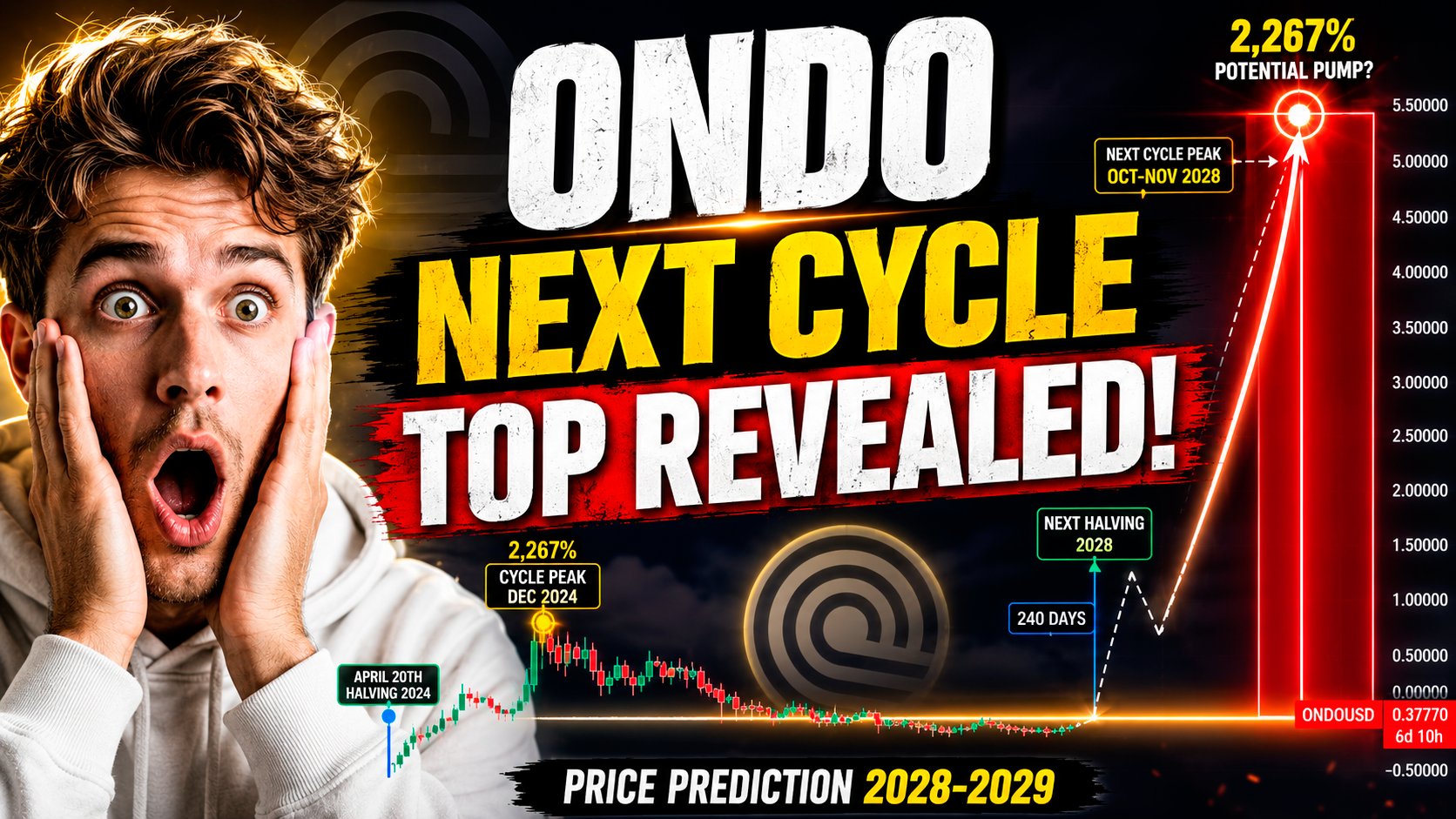
🚨 I think most people
are underestimating $ONDO.
Here's my complete data-driven
analysis for the 2028–2029 cycle. 👇
https://t.co/KulP6w3vAd https://t.co/Fgr1kEveOt


 4.3K @CryptoSpotter05
 🚨 I think most people
are underestimating $ONDO.
Here's my complete data-driven
analysis for the 2028–2029 cycle. 👇
https://t.co/KulP6w3vAd https://t.co/Fgr1kEveOt
 1
1
 1
1
 178
178
 67.2K @Web3Niels
 $ONDO keeps showing up whenever tokenization takes another big step forward.
Last week alone:
The world's largest custodian is launching tokenized fund infrastructure.
Central banks are settling real-value transactions on tokenized rails.
Tokenized stocks hit a record $11.3 billion in monthly volume.
Regulators are now actively working on tokenization frameworks.
And ONDO launched the Ondo Network.
This trend feels bigger every week.
98
31
1.7K
 5.9K @SaroshQ2022
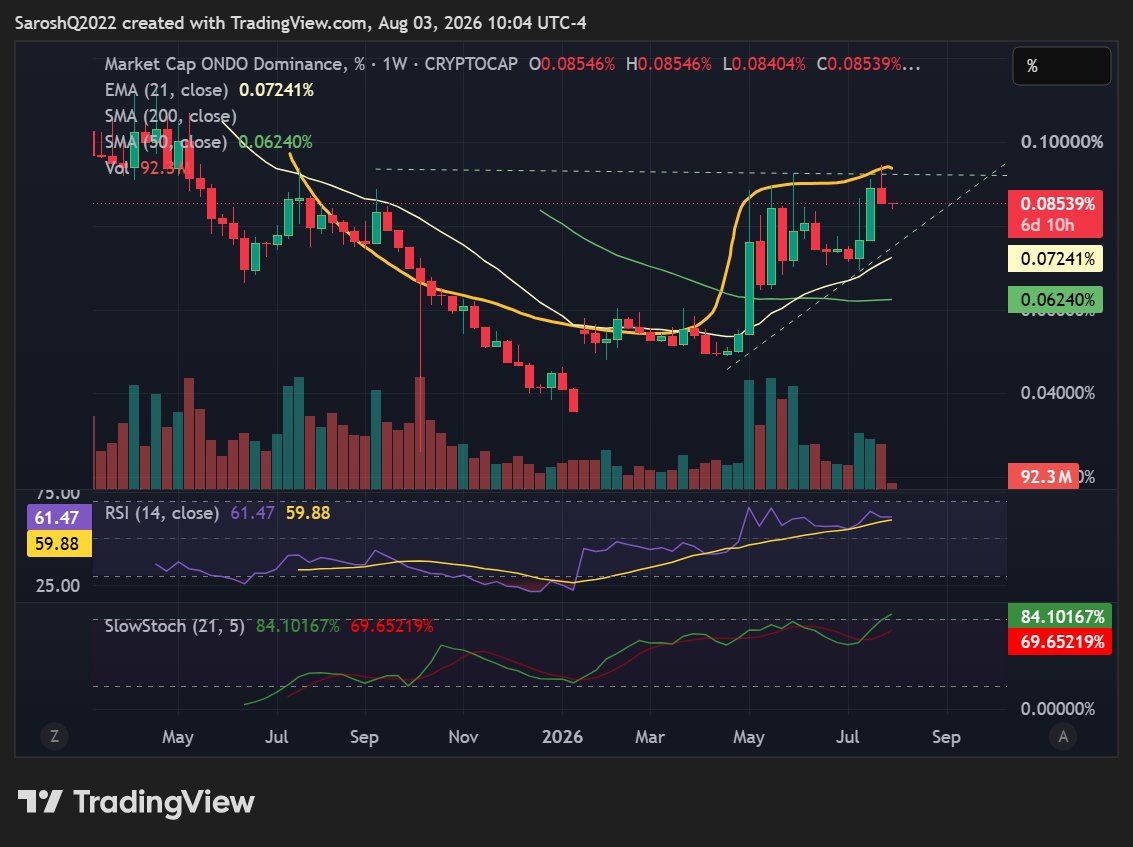
 $ONDO Dominance on the weekly is still printing a very clean cup-and-handle structure, and if it finally clears that resistance, the move could get interesting fast.
It has failed several times on the daily, but most of those failures came while the macro environment was fighting it every step of the way.
Now imagine the opposite: war pressure eases, jobs keep weakening, inflation cools, yields start coming down, the dollar softens, and liquidity finally gets a cleaner path into risk assets.
That is the kind of environment where a setup like this has a much better chance of actually breaking and holding.The chart is bullish. The macro has been the problem. Learn both.
 15
0
638
15
0
638
