Besides @clawchatglobal bear market, what projects are worth deep involvement?
Lately many friends have asked me this question.
When the market is down, most people choose to wait for the rally to restart. But Long has always believed that a bear market is actually the best phase for participation in building.
Because in a bull market, everyone focuses on price; in a bear market, there is time to truly study a project and find where you can contribute.
A while ago, a friend invited me to join @clawchatglobal's development team.
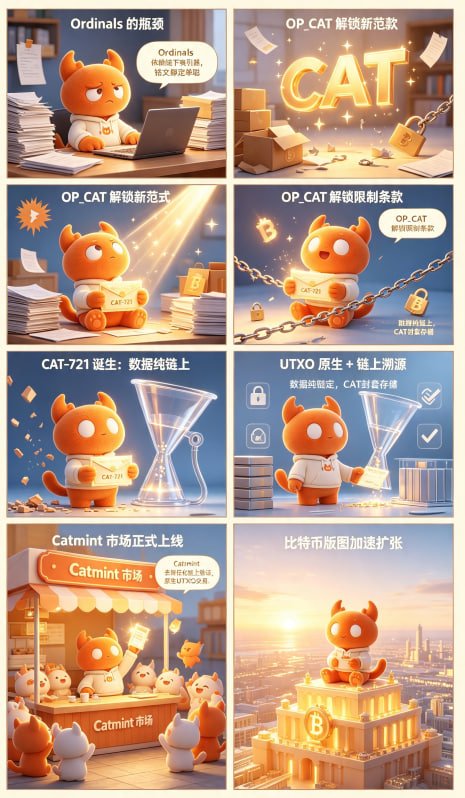
After researching for a while, I found that what attracted me to ClawChat was not just the on-chain social aspect, but more importantly, it has a very clear IP—ClawCat.
An orange cat wearing a white hoodie.
I had previously written several articles about ClawChat, but then I realized that writing articles is just expressing opinions; a true builder is not judged by how much content you post, but whether you have left something in the project that can continuously generate value.
Some people write code, some manage community, some develop ecosystem, and my entry point happens to be AI content creation.
Lately, Long has been obsessed with AI images and videos, researching how to make model generation more stable and meet expectations.
So I thought of a question:
If ClawCat needs to appear long-term in articles, posters, stickers, and videos in the future, what is the biggest challenge?
It's not about generating a nice picture.
But ensuring that each generation is still the same ClawCat.
At first, I asked an LLM to help me create a ClawCat Skill set.
The goal was simple: to make the model know all visual rules of this IP going forward.
The first version looked very professional.
The structure was complete, modules clear, and all references were arranged.
But when actually testing with reference images, I found serious issues.
The model claimed to understand, but the generated ClawCat gradually deviated from the original image.
The white hoodie turned into an orange hoodie.
The flame-shaped hooked ears became ordinary cat ears.
The white capsule eyes turned into glowing eyes.
It even added its own nose, mouth, and whiskers.
I had it modify several rounds consecutively.
Each time it corrected part, but new deviations kept appearing.
Then I realized the problem wasn't the prompt.
The LLM wasn't lacking understanding of the reference image; it had a default template in its mind.
When it sees 'cute cat IP', it automatically associates big eyes, rich expressions, various decorative elements.
So even if you tell it 'strictly follow the reference image', it subconsciously leans toward its own perception.
The real issue is the lack of a strong visual ground truth.
So I changed my approach.
No longer having it keep editing textual descriptions.
Instead, I let the LLM directly regenerate ClawCat based on the reference image.
The reason is simple:
Text descriptions are abstract, but images provide feedback.
You can instantly see if the drawing looks right.
In the first test, I asked it to generate 5 images, and 3 were highly faithful.
Flame ears, white hoodie, capsule eyes, blank face—these core features were retained.
This was much better than repeatedly tweaking the prompt.
Next, I chose the image most similar to the original as the new ground truth.
Then I rebuilt the entire skill.
This time, I required all references to no longer rely on abstract descriptions but to establish rules around this specific image.
Not describing 'a cute orange cat'.
But describing:
What shape the cat's ears are.
What proportion the eyes are.
What the hoodie structure is.
Which features must never change.
Turning the skill from 'generating cats' into 'replicating ClawCat'.
After completion, I conducted extensive testing.
Avatars, stickers, posters, scene images, holiday versions—a total of 200 images.
Results:
Flame ears remain consistent.
Capsule eyes remain consistent.
White hoodie with orange trim is basically stable.
Most importantly, the core recognizability of the flat blank face was not lost.
ClawCat finally became an IP that can be reused long-term.
Of course, I also hit a pitfall along the way.
When making stickers, I added a word to the prompt:
sticker style
The result looked like a sticker but didn't resemble ClawCat.
The reason is that this term triggered the model's internal default style template.
It prioritized a generic cartoon sticker logic, overwriting part of the IP features.
Later I changed it to:
sticker framing
Only describing composition, not triggering the style template, and the issue was solved immediately.
The biggest gain from creating the ClawCat Skill wasn't just building a tool.
But it made me reunderstand building in a bear market.
Real building doesn't necessarily require coding.
You can contribute content, maintain community, or help a project build long-term assets.
Articles will be overridden by new hot topics.
Tweets will be drowned by new market movements.
But a reusable tool, a mature methodology, and an asset truly belonging to the project will remain.
Thus I increasingly believe: the bear market is not a waiting period.
It is a time to find a direction you endorse and leave your building footprints.
That's why I'm willing to spend time turning the ClawCat Skill from an idea into a truly usable system.
@OPCATLayerCN @D7_LuckySeven #BTC