

@TribeCalledRex Look at this banger! 👇🏻🔥🔥🔥🔥🦖 https://t.co/bBJ47gzjp1
Rewards
Futures Daily Draw
100% Chance To Win With Daily Trades
Spot Daily Draw
Win 8,888 USDT In Grand Prizes
Mobile Top-Up
Top up mobiles easily, online, secure
Send
Send money globally, fast and secure
BitMart Mall
Live on crypto
Shrek2HulkSimbaAnusHannahMontanInu Live Price data
Today's price of Shrek2HulkSimbaAnusHannahMontanInu Is $ 2,496.93 (ETH/USD). With A Market Cap Of $ 2.00T USD. 24-Hour Trading Volume Of $ 2.95M USD, A 24-Hour Price Change Of +1.36%, And A Circulating Supply Of 799.94M ETH.
Shrek2HulkSimbaAnusHannahMontanInu ETH Price History USD
Track the price of Shrek2HulkSimbaAnusHannahMontanInu for today, 7 days, 30 days and 90 days
Period
Change
Change (%)
Today
$ 32.47
1.32%
7days
$ 197.09
-7.32%
30days
$ 8.52
-0.34%
90days
$ 691.87
38.33%
Own ETH Now
Buy and sell ETH easily and securely on BitMart.
Shrek2HulkSimbaAnusHannahMontanInu Market Information
$ 2,409.86 24h Range $ 2,535.24
All time high
$ 4,951.74
All time low
$ 81.71
24h Change
1.36%
24h Vol
$ 2,950,921.43
Circulating supply
122.12M
ETH
Market cap
$ 304.94B
Max supply
∞
Fully diluted market cap
$ 2.50T
Trade ETH
Shrek2HulkSimbaAnusHannahMontanInu X Insight

Keith Berry
NFT_Expert
Influencer
C
 221.3K @kokid951
 Extremely Bullish
The author expresses extreme fondness and appreciation for the TribeCalledRex NFT collection minted on ETH.

Tribe Called Rex D
1.6K @TribeCalledRex https://t.co/TRyMITRod0
Keith Berry
NFT_Expert
Influencer
C
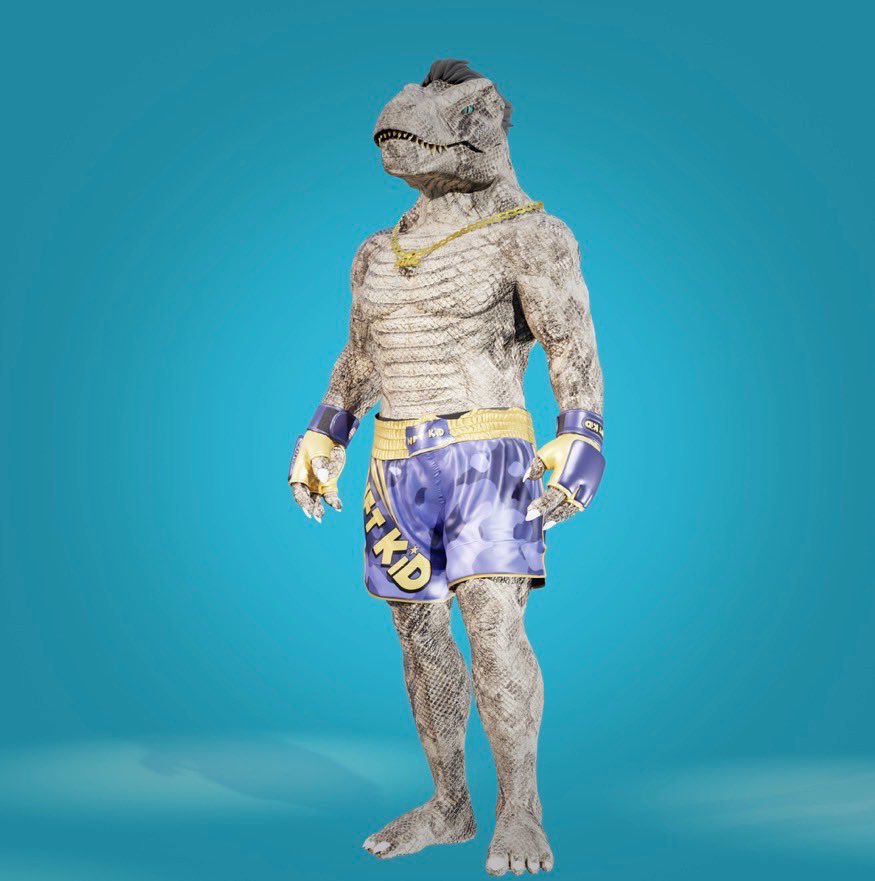
221.3K @kokid951 This is my Rex @TribeCalledRex 🦖
There are many like him but he’s 1 of a kind!
With “NFTkid” fight shorts!
Rocking the King necklace 👑
Huge Ty for this Honor Tribe!
I love this collection on ETH Minting now! 👇🏻 (This is a culture post not paid)
https://t.co/Kg173eSMse https://t.co/QAHITn3Rt3

 0
0
 0
0
 23
23
2026-09-18 21:41
Trend of ETH after release
Extremely Bullish
The author expresses extreme fondness and appreciation for the TribeCalledRex NFT collection minted on ETH.
Keith Berry
NFT_Expert
Influencer
C
221.3K @kokid951 Bullish
The author expresses extreme fondness and appreciation for the TribeCalledRex NFT collection minted on ETH.
This is my Rex @TribeCalledRex 🦖
There are many like him but he’s 1 of a kind!
With “NFTkid” fight shorts!
Rocking the King necklace 👑
Huge Ty for this Honor Tribe!
I love this collection on ETH Minting now! 👇🏻 (This is a culture post not paid)
https://t.co/Kg173eSMse https://t.co/QAHITn3Rt3
36
3
1.1K
2026-09-18 21:41
Trend of ETH after release
Bullish
The author expresses extreme fondness and appreciation for the TribeCalledRex NFT collection minted on ETH.
Keith Berry
NFT_Expert
Influencer
C
221.3K @kokid951 Extremely Bullish
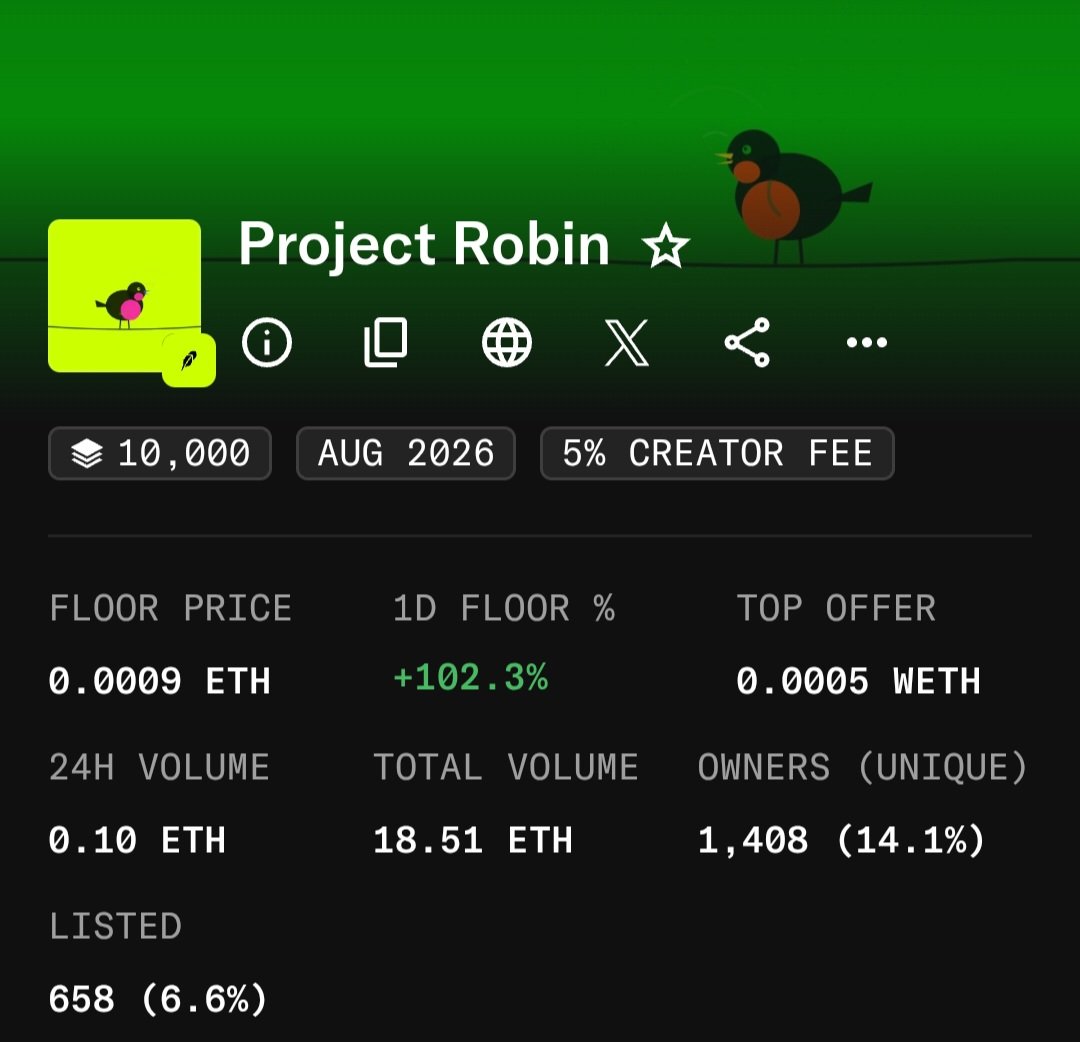
Project Robin's floor price surged by 102.3% in one day, showing extremely strong performance.

WizardX D
22.4K @WizardX_0x RT @WizardX_0x: It's time for Project Robin.
https://t.co/HC2DuKbUmu https://t.co/qzYFIRSCEy
 68
10
3.7K
68
10
3.7K
2026-09-15 17:36
Trend of ETH after release
Extremely Bullish
Project Robin's floor price surged by 102.3% in one day, showing extremely strong performance.
Price Prediction
When is a good time to buy ETH? Should I buy or sell ETH now?
When deciding whether it’s a good time to buy or sell Shrek2HulkSimbaAnusHannahMontanInu (ETH), it’s important to first align with your own trading strategy and risk profile.Long-term investors and short-term traders often interpret market conditions differently, so your decision should reflect your personal approach. According to the latest ETH 1-day technical analysis, the current signal is Hold.

Beacon Prediction
Probabilistic Price Forecast (Next 24 Hours)Beacon Prediction Disclaimer
The data results displayed on this page are analyzed based on actual trading data (OHLCV) of the selected trading pair along with corresponding technical indicators.
This prediction is an experimental technical product and is provided for reference purposes only. It does not constitute investment advice. Unexpected real-world events may significantly impact market behavior. Traders should make decisions with caution.
This prediction is an experimental technical product and is provided for reference purposes only. It does not constitute investment advice. Unexpected real-world events may significantly impact market behavior. Traders should make decisions with caution.
Q&A
How Much Is Ethereum Worth?
When Was Ethereum Created?
About Shrek2HulkSimbaAnusHannahMontanInu
Ethereum (ETH) is a decentralized platform that runs smart contracts, defined as applications that run exactly as programmed without any possibility of downtime, censorship, fraud, or third-party interference. These apps run on a custom built blockchain, an enormously powerful shared global infrastructure that can move value around and represent the ownership of property. This enables developers to create markets, store registries of debts or promises, move funds in accordance with instructions given long in the past (like a will or a futures contract) and many other things that have not been invented yet, all without a middleman or counterparty risk. The project was bootstrapped via an ether presale in August 2014 by fans all around the world. It is developed by the Ethereum Foundation, a Swiss non-profit, with contributions from great minds across the globe.
Read More
Official Links
Chain Explorer
Buy ETH
Trade ETH