Summary
- The Democratic Party’s K-Capital Markets Committee said it would refrain from using the term ETF in the names of single-stock leveraged ETF products and review legal revisions if needed.
- The government’s move to raise the minimum deposit to 30 million won could cut the number of accounts to one-tenth and reduce daily trading volume by 60%, and the threshold could be increased to 50 million won depending on circumstances.
- Lawmakers discussed the idea of adjusting leverage ratios for single-stock leveraged products, but said it is not under consideration for now because of technical and procedural hurdles.
K-Capital Markets Committee meets asset managers and brokerages
Leverage-ratio changes not decided
The Democratic Party’s K-Capital Markets Committee discussed a plan to refrain from using the term “ETF” in the names of single-stock leveraged products. It also said it would consider revising the law if necessary.
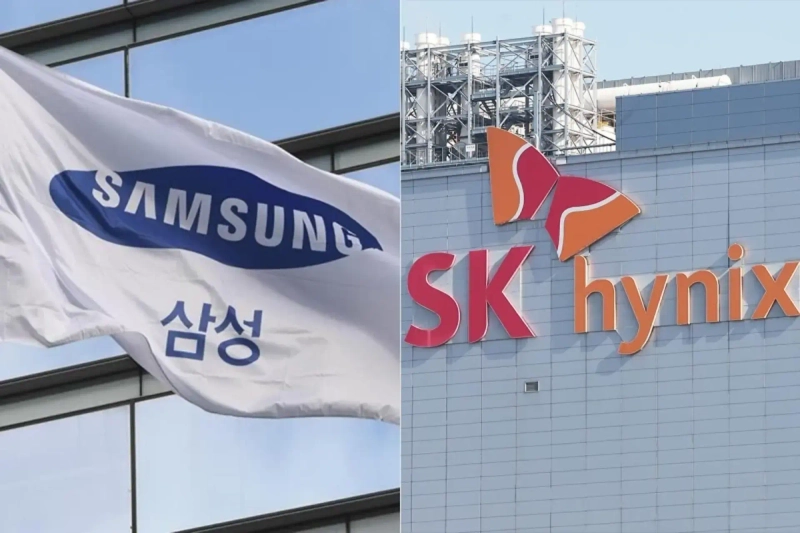
Lawmakers on the committee held a closed-door meeting with executives from asset managers and brokerages on July 27 at the Korea Financial Investment Association in Seoul’s Yeouido district to discuss single-stock leveraged ETFs tied to companies such as Samsung Electronics and SK Hynix. Rather than immediately pursuing delistings, participants formed a consensus around steps to curb volatility, including raising the minimum deposit requirement and strengthening investor education.
Kim Nam-kun, a Democratic Party lawmaker who serves as the committee’s secretary, told reporters after the meeting that single-stock ETFs linked to Samsung Electronics and SK Hynix have contributed to stock-market volatility, but are not the main cause. Asset managers said semiconductor stocks themselves are highly volatile in the US and Japan, so the issue is not unique to these products. Still, participants agreed the products have weakened trust in the stock market built through institutional reform.
On the government’s plan to raise the minimum deposit requirement to 30 million won starting in August, Kim said the move could cut the number of accounts to one-tenth of current levels and reduce daily trading volume by about 60%. Lawmaker Lee Kang-il said accounts with less than 30 million won in deposits currently account for 90% of trading frequency and 60% of trading value. A larger seed amount would lead investors to place more emphasis on stability, he added. Lawmaker Min Byung-duk said the threshold could be raised to 50 million won depending on circumstances.
Participants also shared the view that the ETF label itself is inappropriate. Committee Chairman Oh said ETFs were originally designed as exchange-traded funds that bundle multiple assets for diversified investment. But once leverage was added to single-stock products, they became concentrated-risk vehicles. That has raised questions about whether they should continue to carry the ETF name.
The Financial Services Commission had already issued guidance in May on naming single-stock ETFs. The FSC said such products would avoid the term “ETF” in their names to prevent confusion with conventional ETFs and would instead be clearly labeled as single-stock products. Kim added that the government’s measures had already moved away from using the ETF term. Oh said the committee would also pursue legal revisions if needed.
The committee said it has not reached a conclusion on lowering the multiple applied to the daily returns tracked by single-stock leveraged products. Oh said he had asked the Financial Services Commission and the Financial Supervisory Service to review whether leverage ratios could be adjusted. One idea raised at the meeting was to lower the index factor on the underlying asset to 0.75 from 1, which, when combined with 2x leverage, would effectively produce 2.5x exposure. Kim said that was not technically impossible, but the process would be difficult because it would require steps such as a beneficiary meeting. For now, he said, it is not under consideration.
Choi Hae-ryeon, Hankyung.com reporter, [email protected]
Park Ju-yeon, Hankyung.com reporter, [email protected]
Disclaimer: The market is risky, and investment needs to be cautious. This article does not constitute investment advice. Users should consider whether any opinions, views, or conclusions in this article are in line with their specific circumstances. Investment based on this is at their own risk.