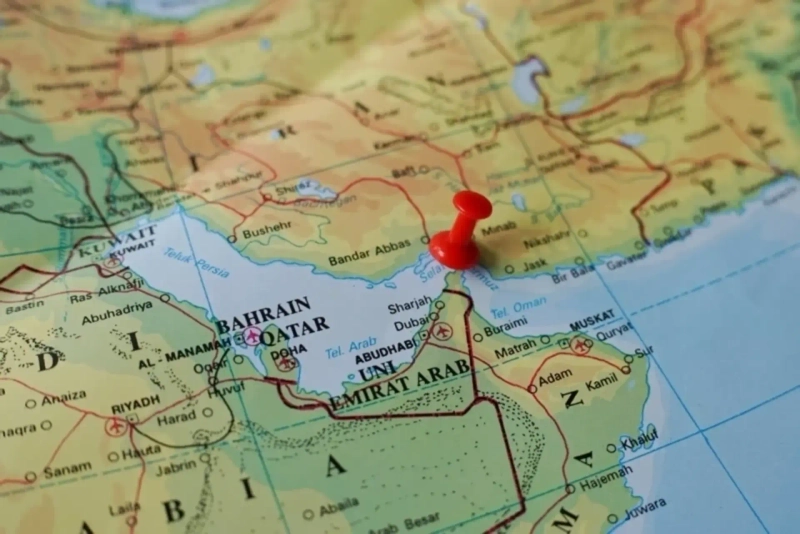
About 5 Million Barrels a Day Passed Through the Strait Over the Past Four Weeks
Diversion Shipments Also Rise as Pressure Builds on Iran
Oil shipments are rising again six months after Iran blockaded the Strait of Hormuz. An average of about 5 million barrels a day passed through the waterway over the past four weeks. Another 2.5 million barrels a day was shipped from ports outside the strait to bypass the blockade.
The Wall Street Journal reported on September 4 that the impact of Iran’s closure of the Strait of Hormuz is steadily weakening. Oil prices remain high, but the global economy is adapting to the supply shock, the newspaper said.
The Strait of Hormuz is a critical artery for global oil trade, with about 20% of the world’s supply passing through it. Iran sought to pressure oil prices and the global economy by shutting the route. It hoped that leverage would push the U.S. to end the war on terms favorable to Tehran.
“The Iranian regime’s calculation in blockading the Strait of Hormuz and trapping 20% of global oil supply six months ago has clearly proved to be a misjudgment,” the WSJ said. The blockade neither triggered a global economic crisis nor forced President Donald Trump to end the war on terms Iran wanted, the paper added.
Oil transport through the strait was effectively paralyzed in the early days of the blockade. Alternative routes emerged over time. TankerTrackers.com, a maritime intelligence firm, estimated that about 5 million barrels a day moved through the strait on average over the past four weeks.
An estimated 2.5 million barrels a day was also shipped from ports outside the strait, including Fujairah in the United Arab Emirates. Combined, the two routes account for about 40% of prewar oil export volumes.
“Iran’s closure of the Strait of Hormuz has more holes than the U.S. military’s maritime blockade,” Samir Madani, founder of TankerTrackers.com, said. Tehran has been unable to fully seal those gaps.
The U.S. also failed to achieve the outcome it wanted. After airstrikes did not force Iran to yield, Washington imposed a maritime blockade and economic sanctions. Even so, it did not trigger a popular uprising inside Iran or secure the reopening of the Strait of Hormuz.
The economic burden is mounting faster in Iran. The U.S. Navy’s maritime blockade effectively halted Iran’s seaborne oil exports in July. When the U.S. blockade began, the Iranian government had estimated it could hold out for about five months.
The U.S. maritime blockade lasted about two months from April 13. It was lifted for about a month under a memorandum of understanding to end the war on June 18, but was later reinstated.
“Time is on no one’s side,” a senior official from a Gulf state said. Because Iran is under enormous economic pressure, the clock is ticking faster for Tehran.
The WSJ said Iran could step up military pressure as the impact of the Hormuz blockade fades. Rather than capitulate, Tehran may escalate the conflict to strengthen its bargaining position.
Vali Nasr, a professor of Middle East studies at Johns Hopkins University, said Iran’s calculation is that even if it returns to negotiations and makes concessions, greater military pressure would allow it to concede less. He added that Iran would worsen the situation on a much larger scale to escape the crisis.
Lee Song-ryeol, Hankyung.com reporter [email protected]
Disclaimer: The market is risky, and investment needs to be cautious. This article does not constitute investment advice. Users should consider whether any opinions, views, or conclusions in this article are in line with their specific circumstances. Investment based on this is at their own risk.