
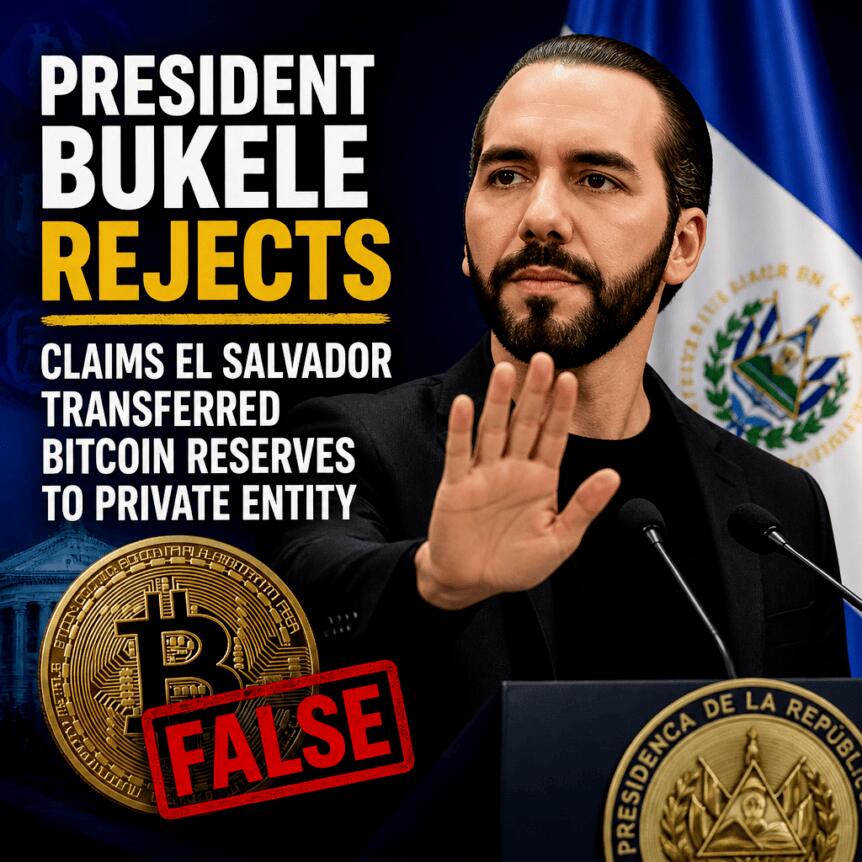
El Salvador President Nayib Bukele has rejected reports that the country transferred its Strategic Bitcoin Reserve to a private operator as part of its agreement with the International Monetary Fund (IMF).
The denial came after the IMF reached a preliminary agreement with El Salvador that will unlock $140 million in additional funding under a broader $1.4 billion financing program.
Bukele said the transaction involved shares in the government’s Chivo wallet rather than the country’s Bitcoin holdings, pushing back against reports that the reserve itself had been handed to a private entity.
Key Takeaways
- Nayib Bukele says El Salvador did not transfer its Strategic Bitcoin Reserve to a private operator.
- The president said only shares in the Chivo wallet were transferred.
- The IMF has agreed to release another $140 million as part of its $1.4 billion program with El Salvador.
- The country’s Bitcoin holdings have risen from about 6,224 BTC in June 2025 to more than 7,764 BTC.
- The IMF says recent growth in the reserve came from private donations rather than government spending.
Bukele Draws a Line Between Chivo and El Salvador’s Bitcoin Reserve
Bukele responded to reports about the transfer on Friday, saying the government had not handed over control of its strategic Bitcoin holdings.
“The only thing that was transferred were Chivo’s shares … and NOT the Strategic Bitcoin Reserve,” Bukele said in a post on X.
The comments came shortly after the IMF outlined changes involving El Salvador’s state-backed Chivo wallet. The Fund said majority ownership and operational control of the wallet had been transferred to a private operator.
The government, however, continues to hold a minority stake and retains responsibility for the custody of customer assets.
The distinction is important because Chivo and the Strategic Bitcoin Reserve represent separate parts of El Salvador’s cryptocurrency strategy.
El Salvador’s Bitcoin Holdings Continue to Attract Attention
El Salvador became the first country to adopt Bitcoin as legal tender in 2021, introducing it alongside the US dollar. The policy later became a central issue in negotiations with the IMF.
The government removed Bitcoin’s legal tender status in January as part of the conditions surrounding the IMF program.
Despite the policy changes, El Salvador’s Bitcoin holdings have continued to increase. The country’s reserve stood at around 6,224 BTC at the end of June 2025 and has since risen to more than 7,764 BTC.
That represents an increase of roughly 1,540 BTC.
The size of the increase has raised questions because Salvadoran officials have continued to promote the idea of adding one Bitcoin per day to the national reserve.
IMF Says Recent Bitcoin Growth Came From Donations
Meanwhile, the
This article was originally published as President Bukele Rejects Claims El Salvador Transferred Bitcoin Reserves To Private Entity on Crypto Breaking News – your trusted source for crypto news, Bitcoin news, and blockchain updates.
Disclaimer: The market is risky, and investment needs to be cautious. This article does not constitute investment advice. Users should consider whether any opinions, views, or conclusions in this article are in line with their specific circumstances. Investment based on this is at their own risk.