
@TribeCalledRex Look at this banger! 👇🏻🔥🔥🔥🔥🦖 https://t.co/bBJ47gzjp1
Acheter des cryptomonnaies
carte
P2P Trading
Achetez des USDT sur la marketplace
Carte bancaire
Achetez des cryptomonnaies avec une carte Visa ou Mastercard
Paiement par un tiers
Buy des crypto via MoonPay, Simplex et plus
BitMart Card
Dynamisez vos investissements dans les cryptos
Carte prépayée crypto
Obtenez instantanément une Mastercard prête à l'emploi
Échanger
Spot
Négociez des cryptomonnaies rapidement et de manière professionnelle
BM Discovery
La plateforme de découverte d'actifs On-Chain la plus rapide
DEX
bêta
La solution la plus simple pour trader en chaîne.
Marge
5x
Augmentez vos profits grâce à l'effet de levier
Pré-marché
Planifiez à l'avance, saisissez l'opportunité
USDⓈ-M
En utilisant USDⓈ comme garantie
COIN-M
Utiliser la cryptomonnaie elle-même comme garantie
TradFi
Un guichet unique pour les métaux, les actions et le forex
Démo de trading
Apprenez à trade sans risque
Aperçu des contrats à terme
Une plateforme unique pour tout ce qui concerne les contrats à terme
Futures King
Cagnotte de 478 000 USDT
Augmenter
Aperçu des gains
Actifs inactifs, obtenez des rendements en toute simplicité
Épargne
Gagnez des intérêts grâce à vos avoirs.
Staking
Staking facile, récompenses élevées
Gestion de patrimoine
Développez votre patrimoine avec une équipe d'actifs de premier ordre Top
RWA
Conservez le BMRUSD et profitez du rendement
Offre exclusive pour les VIP
Gagner en toute sécurité pour les utilisateurs VIP
Rewards
Centre de récompenses
Découvrez des récompenses exclusives d'une valeur allant jusqu'à 14 000 USDT
Lancement Prime
Une plateforme de lancement de jetons et NFT
Programme d'affiliation
Rejoignez-nous pour profiter de commissions élevées
Powerdrop
La solution airdrop de nouvelle génération est DISPONIBLE !
Centre des événements
Le guichet unique pour toutes les opérations commerciales
Tirage au sort quotidien futures
100% de chances de gagner avec les tradings quotidiens
Tirage quotidien Spot
Gagnez 8 888 USDT en grands prix
Staker pour voter
Gagnez des airdrops en votant
Institution
Des services professionnels et exclusifs
VIP
Débloquez des récompenses exclusives
Académie
Tout ce que vous devez savoir sur le trading et la blockchain.
Stage chez BitMart
Commencez votre carrière en crypto ici
Bitmart Travel
Services de voyage mondiaux One-Stop
INO
Une plateforme de lancement de NFT
Stake BMX pour le listing
Partager les frais de transaction
APIS
Une stabilité fiable et de nombreux points de terminaison
Programme de courtier
Gagnez des commissions grâce à l'intégration d'API
Actualités
Dernières actualités et derniers points de vue
MARKETPLACE NFT
Une marketplace NFT unique en son genre
Recharge mobile Top
Rechargez vos téléphones portables facilement, online, en toute sécurité
Send
Send money globally, fast and secure
BitMart Mall
Événement en direct sur les cryptomonnaies
Ethereum Données sur les prix en temps réel
Le prix de Ethereum aujourd'hui est $ 2,710.06 (ETH/USD). Avec une capitalisation boursière de $ 330.80B USD. Volume de trading de $ 2.69M USD sur 24 heures, Un changement de prix de +2.84% sur 24 heures, Et une réserve circulante de 122.06M ETH.
Ethereum ETH Historique des prix USD
Suivez le prix de Ethereum aujourd’hui, dans 7 jours, 30 jours et 90 jours
Période
Modifier
Variation (en pourcentage)
Aujourd'hui
$ 73.92
2.80%
7Jours
$ 193.41
7.69%
30Jours
$ 236.00
9.54%
90Jours
$ 1,003.43
58.80%
Possédez ETH dès maintenant
Achetez et vendez ETH facilement et en toute sécurité sur BitMart.
Ethereum Informations sur le marché
$ 2,635.24 Fourchette de prix sur 24 heures $ 2,715.01
Record absolu
$ 4,955.32
Plus bas niveau jamais atteint
$ 81.77
Variation sur 24 heures
2.84%
Volume sur 24 h
$ 2,687,021.40
Approvisionnement en circulation
122.06M
ETH
Capitalisation boursière
$ 330.80B
Approvisionnement maximal
∞
Capitalisation boursière entièrement diluée
$ 330.80B
Trader ETH
Gagner
Faites fructifier vos cryptomonnaies et générez des revenus passifs grâce à l'épargne, au staking, et plus encore.
Ethereum X Insight

Keith Berry
NFT_Expert
Influencer
C
 221.3K @kokid951
 Extrêmement haussier
The author expresses extreme fondness and appreciation for the TribeCalledRex NFT collection minted on ETH.

Tribe Called Rex D
1.6K @TribeCalledRex https://t.co/TRyMITRod0
Keith Berry
NFT_Expert
Influencer
C
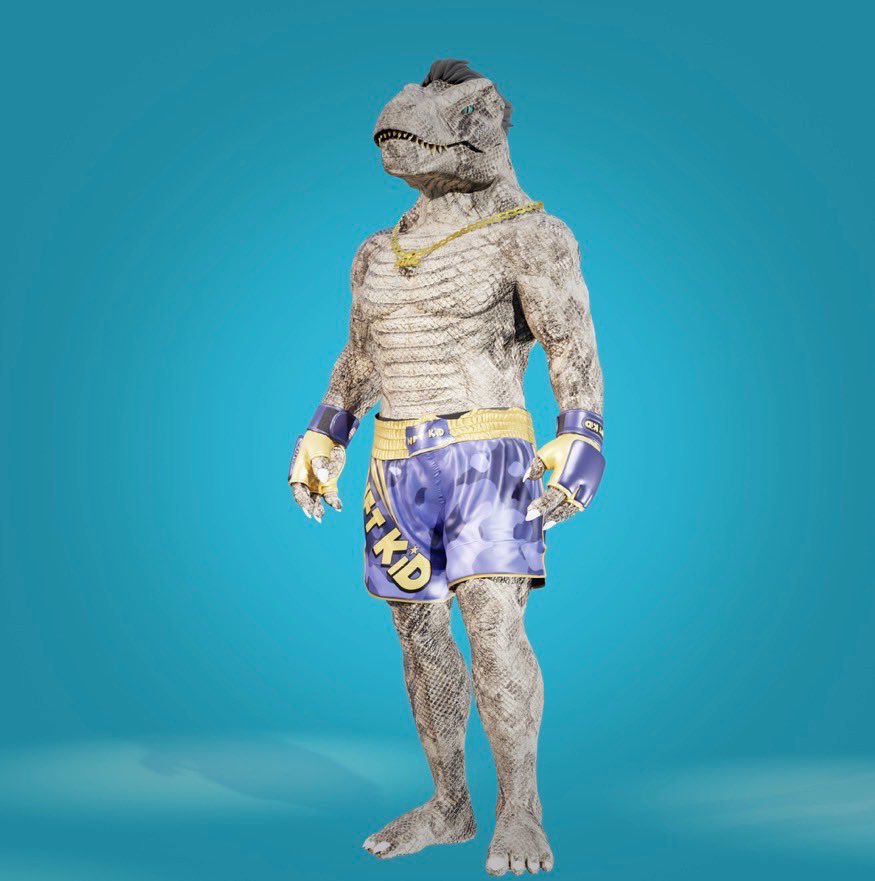
221.3K @kokid951 This is my Rex @TribeCalledRex 🦖
There are many like him but he’s 1 of a kind!
With “NFTkid” fight shorts!
Rocking the King necklace 👑
Huge Ty for this Honor Tribe!
I love this collection on ETH Minting now! 👇🏻 (This is a culture post not paid)
https://t.co/Kg173eSMse https://t.co/QAHITn3Rt3

 0
0
 0
0
 23
23
2026-09-18 21:41
Tendance de ETH après le lancement
Extrêmement haussier
The author expresses extreme fondness and appreciation for the TribeCalledRex NFT collection minted on ETH.
Keith Berry
NFT_Expert
Influencer
C
221.3K @kokid951 Haussier
The author expresses extreme fondness and appreciation for the TribeCalledRex NFT collection minted on ETH.
This is my Rex @TribeCalledRex 🦖
There are many like him but he’s 1 of a kind!
With “NFTkid” fight shorts!
Rocking the King necklace 👑
Huge Ty for this Honor Tribe!
I love this collection on ETH Minting now! 👇🏻 (This is a culture post not paid)
https://t.co/Kg173eSMse https://t.co/QAHITn3Rt3
36
3
1.1K
2026-09-18 21:41
Tendance de ETH après le lancement
Haussier
The author expresses extreme fondness and appreciation for the TribeCalledRex NFT collection minted on ETH.
Keith Berry
NFT_Expert
Influencer
C
221.3K @kokid951 Extrêmement haussier
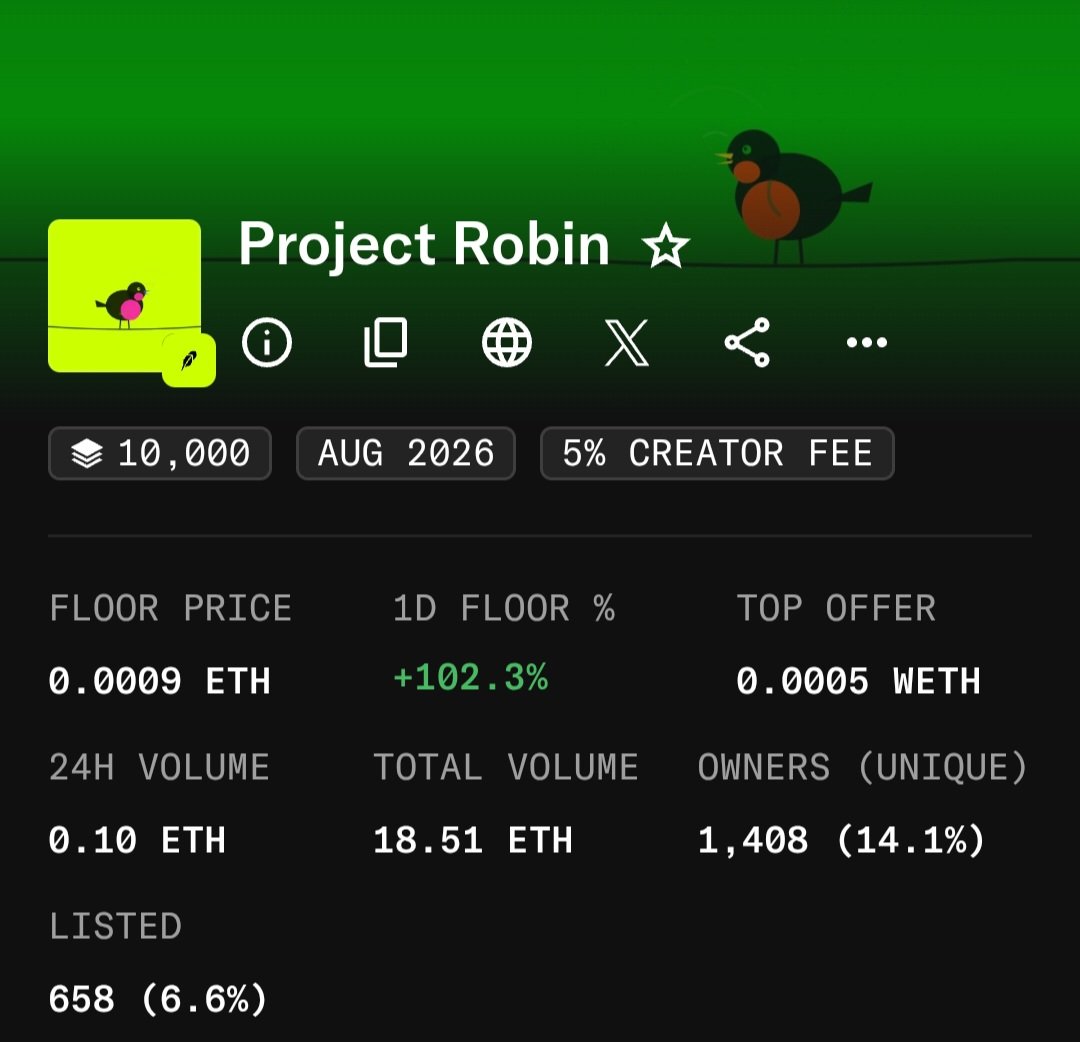
Project Robin's floor price surged by 102.3% in one day, showing extremely strong performance.

WizardX D
22.4K @WizardX_0x RT @WizardX_0x: It's time for Project Robin.
https://t.co/HC2DuKbUmu https://t.co/qzYFIRSCEy
 68
10
3.7K
68
10
3.7K
2026-09-15 17:36
Tendance de ETH après le lancement
Extrêmement haussier
Project Robin's floor price surged by 102.3% in one day, showing extremely strong performance.
Prévision de prix
Quel est le meilleur moment pour acheter ETH? Dois-je acheter ou vendre ETH maintenant ?
Pour déterminer s'il est opportun d'acheter ou de vendre Ethereum (ETH), il est important de commencer par s'aligner sur sa propre stratégie de trading et son profil de risque. Les investisseurs à long terme et les traders à court terme interprètent souvent les conditions du marché différemment, votre décision doit donc refléter votre approche personnelle. Selon la dernière analyse technique ETH de 4 heures, le signal de trading actuel est Tenez. Selon la dernière analyse technique ETH sur 1 jour, le signal actuel est Tenez.

Prédiction de Beacon
Prévision probabiliste des prix (Prochaines 24 heures)Avertissement de prédiction de Beacon
Les résultats affichés sur cette page sont analysés sur la base des données de trading réelles (OHLCV) de la paire de trading sélectionnée ainsi que des indicateurs techniques correspondants.
Cette prédiction est un produit technique expérimental et est fournie uniquement à titre de référence. Ceci ne constitue pas un conseil en investissement. Des événements inattendus du monde réel peuvent avoir un impact significatif sur le comportement du marché. Les traders doivent prendre des décisions avec prudence.
Cette prédiction est un produit technique expérimental et est fournie uniquement à titre de référence. Ceci ne constitue pas un conseil en investissement. Des événements inattendus du monde réel peuvent avoir un impact significatif sur le comportement du marché. Les traders doivent prendre des décisions avec prudence.
Q&R
How Much Is Ethereum Worth?
When Was Ethereum Created?
À propos Ethereum
Ethereum (ETH) is a decentralized platform that runs smart contracts, defined as applications that run exactly as programmed without any possibility of downtime, censorship, fraud, or third-party interference. These apps run on a custom built blockchain, an enormously powerful shared global infrastructure that can move value around and represent the ownership of property. This enables developers to create markets, store registries of debts or promises, move funds in accordance with instructions given long in the past (like a will or a futures contract) and many other things that have not been invented yet, all without a middleman or counterparty risk. The project was bootstrapped via an ether presale in August 2014 by fans all around the world. It is developed by the Ethereum Foundation, a Swiss non-profit, with contributions from great minds across the globe.
En savoir plus
Liens officiels
Chain Explorer
Acheter ETH
Trader ETH