$SUI #SUIUSDT
4시간 차트의 마지막 저가 캔들이 마감되지 않으면 X로 표시된 구역까지 확장될 수 있습니다.
시간 단위 차트에서 추세를 상승으로 깨고 싶어합니다.
제가 밀접하게 팔로우하는 코인으로, 지난 주부터 롱 포지션을 유지하고 있습니다. https://t.co/u4sRVYyhfS
$SUI #SUIUSDT
4시간 차트의 마지막 저가 캔들이 마감되지 않으면 X로 표시된 구역까지 확장될 수 있습니다.
시간 단위 차트에서 추세를 상승으로 깨고 싶어합니다.
제가 밀접하게 팔로우하는 코인으로, 지난 주부터 롱 포지션을 유지하고 있습니다. https://t.co/u4sRVYyhfS
@canozsuer Sui는 무엇을 할까, 왕?
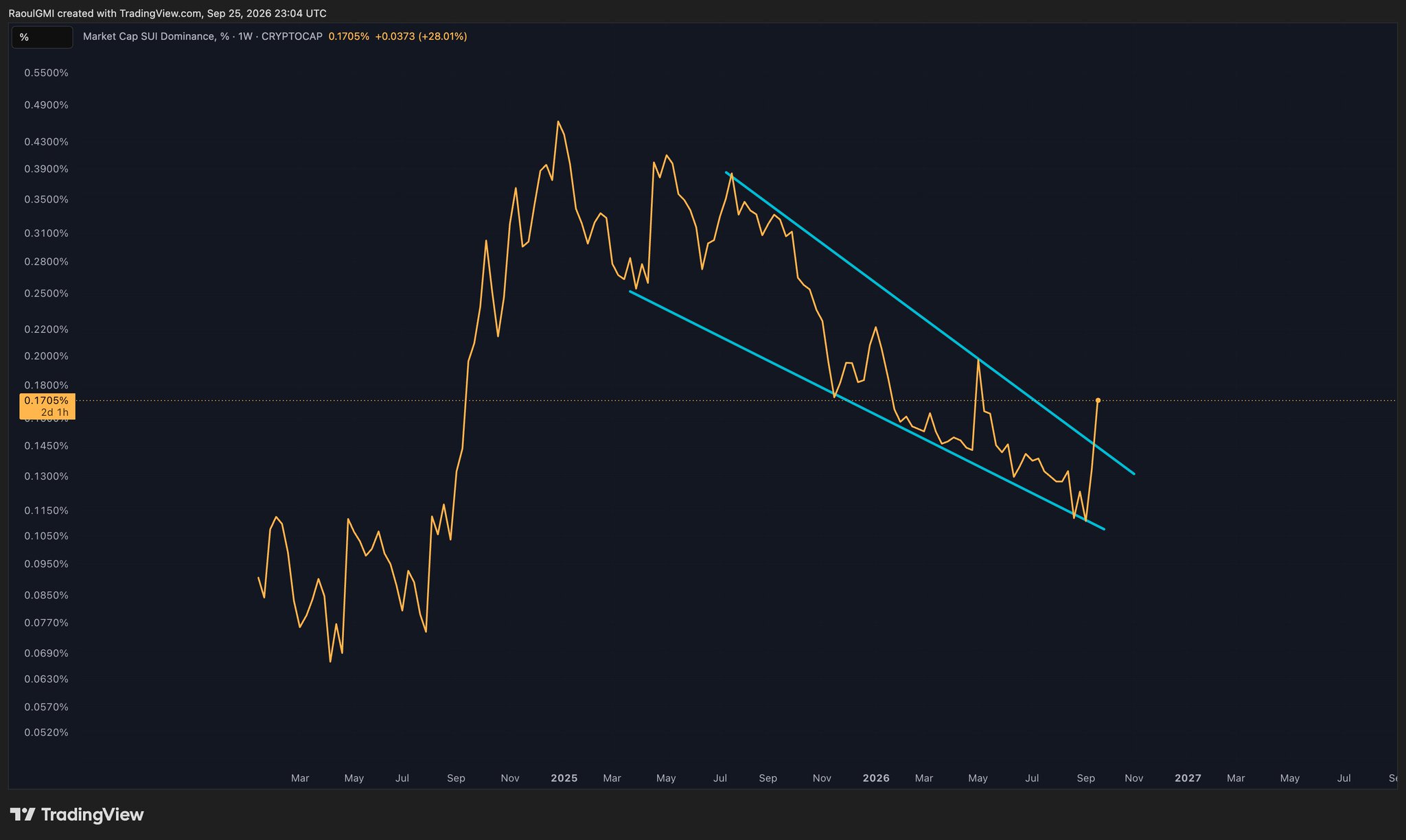
확대해 보세요. $SUI 월간 구조는 암호화폐에서 가장 깔끔한 추세 중 하나입니다
로드맵: $0.50 → $5 → $10
고시간 프레임의 상승 구조가 유지되는 한, 장기 논리는 유효합니다. https://t.co/IqVASGSos1
2- $SUI Deep Dive | Under The Hood: August 3, 2026
Let's Continue
But this is exactly why I wanted to revisit the comparison.
Is Sui dying underneath the consolidation—or building underneath it?
The answer surprised me somewhat.
It is building.
1. Development Has Not Died
This is probably the first thing I would check if I were trying to determine whether Sui had become another useless altcoin.
Electric Capital currently tracks approximately:
• 685 monthly active developers
• 219 full-time developers
• roughly 11,000 repositories
• approximately 1.3 million commits
across the Sui ecosystem.
That's not a dead developer ecosystem.
And Mysten's core Sui repository remains actively maintained, with hundreds of releases recorded.
This is important because price can lie about development for a very long time.
Capital leaves much faster than engineers do.
When I look for a genuinely dying Layer 1, I want to see developers leaving, infrastructure becoming stagnant, applications disappearing, liquidity evaporating and the core organization reduced to marketing the token.
That's not what I found here.
2. The Infrastructure Has Gotten Considerably Better
This is probably the strongest part of the Sui story.
The network hasn't spent this bear market sitting around waiting for SUI to go back to $5.
The entire data architecture has been rebuilt.
Sui now has production-grade:
• gRPC
• GraphQL RPC
• Archival Store infrastructure
And the old JSON-RPC architecture is now being phased out beginning in late July. QuickNode, Ankr, BlockPI and ZAN are already supporting the new stack.
That's boring.
And that's exactly the kind of boring I want to see.
These are the plumbing improvements that developers need before serious applications can operate at scale.
$SUI CONTINUED
3. The Payments Strategy Has Become Much More Serious
This was one of the areas that caught my attention.
Sui launched USDsui in March, issued through Bridge, which is owned by Stripe.
This isn't another algorithmic ecosystem stablecoin cooked up by a DeFi team.
It uses Bridge's issuance infrastructure and is integrated across wallets and applications including NAVI, Bluefin, Cetus, Scallop, Suilend, Aftermath and others.
Then in May, Sui introduced gasless stablecoin transfers.
Users can transfer supported stablecoins without holding SUI for gas.
That is an important UX improvement if you're trying to build payments rather than simply crypto trading.
And then this gets more interesting.
4. Paga Is Integrating Sui
This is exactly the type of development I care more about than another partnership announcement with a crypto company nobody has heard of.
Paga, one of Africa's major payments companies, is integrating USDsui into its consumer and enterprise infrastructure.
Paga processe
$SUI (Continued)
5. Regulated Banking Infrastructure Is Showing Up Too
In April, Erebor Bank, N.A. added Sui support for stablecoin deposits and withdrawals.
Sui is one of the relatively small number of networks supported by the bank.
Then in June, Remi announced regulated bank-issued stablecoin infrastructure on Sui involving Bison Bank-issued euro and dollar e-money tokens, structured around MiCA, FATF and Basel requirements.
Again, none of this guarantees token appreciation.
But this does not look like an abandoned Layer 1.
Quite the opposite.
They are pushing increasingly toward payments, settlement and financial infrastructure. (TBC)