Aave (AAVE)
$91.72 -0.90% 24H
- 40Індекс соціальних настроїв (SSI)-48.56% (24h)
- #52Рейтинг пульсу ринку (MPR)-24
- 1124-годинні згадки в соціальних мережах-59.26% (24h)
- 54%24-годинний коефіцієнт бичачого настрою KOL10 Активних KOL
- Підсумок
- Бичачі сигнали
- Ведмежі сигнали
Індекс соціальних настроїв (SSI)
- Загальні дані40SSI
- Тенденція SSI (7 днів)Ціна (7 днів)Розподіл настроївНадзвичайно бичачий (18%)Бичачий (36%)Ведмежий (46%)Аналітика SSI
Рейтинг пульсу ринку (MPR)
- Аналітика сповіщень
Дописи з платформи X
- Тенденція AAVE після випускуВедмежий
- Тенденція AAVE після випускуБичачий
- Тенденція AAVE після випускуНадзвичайно бичачий
- Тенденція AAVE після випускуВедмежий
- Тенденція AAVE після випускуВедмежий
- Тенденція AAVE після випускуБичачий
 🐺 FREKI ANCIENT CRYPTO OG 2011 | HBAR XRP BTC FLR Influencer Media B10.75K @Freki_OG
 Kenny Nguyen D129.65K @mrnguyen007
 1.41K 71 35.23K Оригінал >Тенденція AAVE після випускуБичачий
 Stani Founder DeFi_Expert C300.57K @StaniKulechov
 sealaunch intelligence D9.26K @sealaunch_
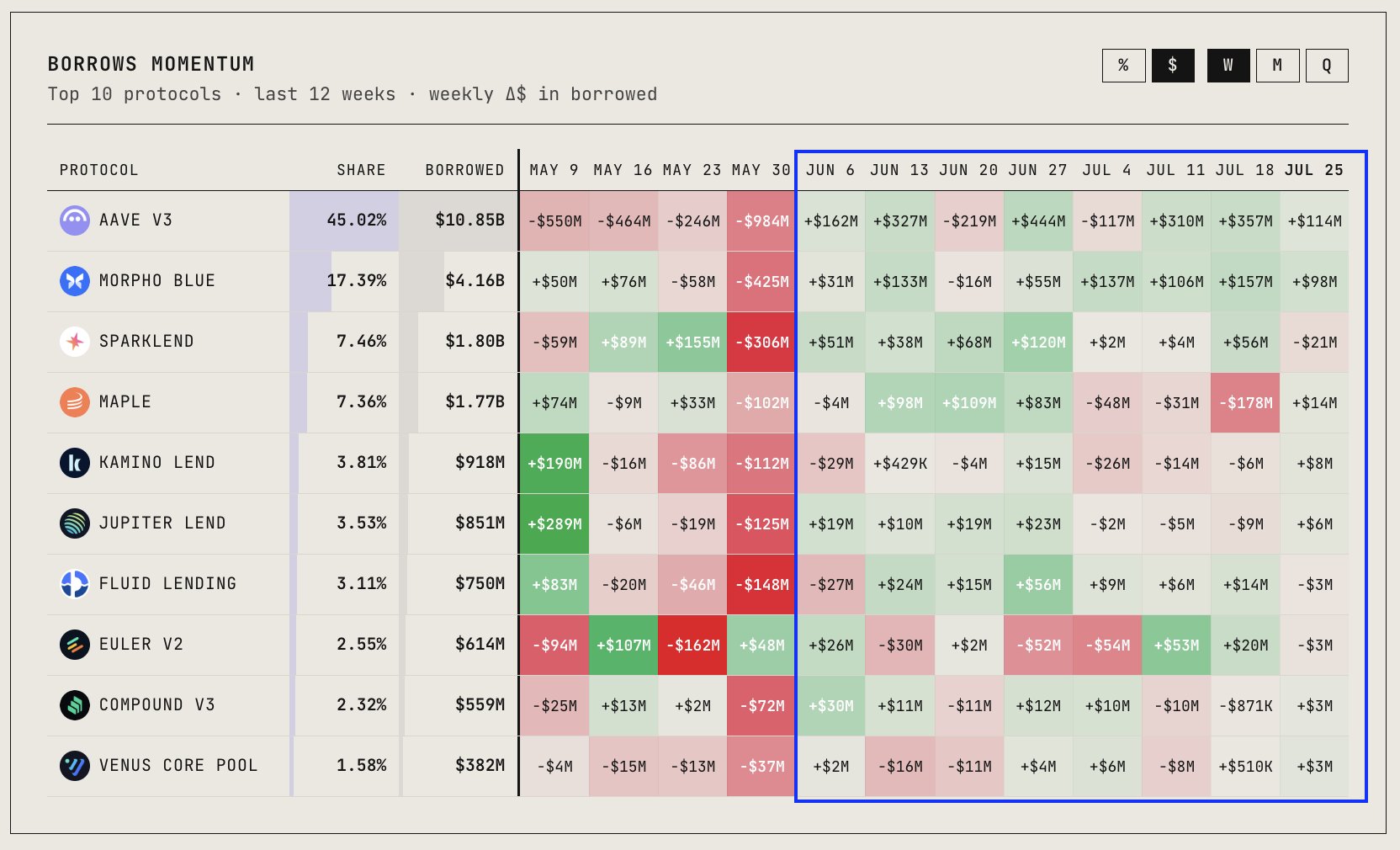 213 30 21.63K Оригінал >Тенденція AAVE після випускуНадзвичайно бичачий
- Тенденція AAVE після випускуВедмежий
- Тенденція AAVE після випускуБичачий