Running a one‑person company has been criticized a lot in the past two years, but anyone who has actually done it knows where the bottleneck lies — you have ideas and a clear product direction, but once you get to writing code, setting up servers, and daily maintenance, a solo founder is exhausted. AI can write code, but code isn’t the same as a runnable business; that dirty, hard work in the middle is the real hurdle.
@dappOS_com aims to solve that part.
Its positioning is a low‑threshold Web3 AI operating system, and its flagship product xBubble can be roughly understood as a Web3 version of Codex with an on‑demand work companion. The three components each handle a part—Bubble Engine captures and continuously refines SOPs for various tasks, Bubble Pilot decides which solution fits your request, and Bubble Code applies the same logic to the actual building of software and business. In short, it doesn’t give you a stack of models to prompt yourself; it delivers the results directly to you.
Why it’s worth watching — let’s look at some hard numbers first:
It has raised over $20 million in total, with top‑tier investors such as Polychain Capital, YZi Labs, Sequoia China, IDG Capital, OKX Ventures, among others; xBubble already has 10,275 paying OPC customers and cumulative revenue exceeding $6.8 million. In this space, few projects can show genuine paying users and real revenue.
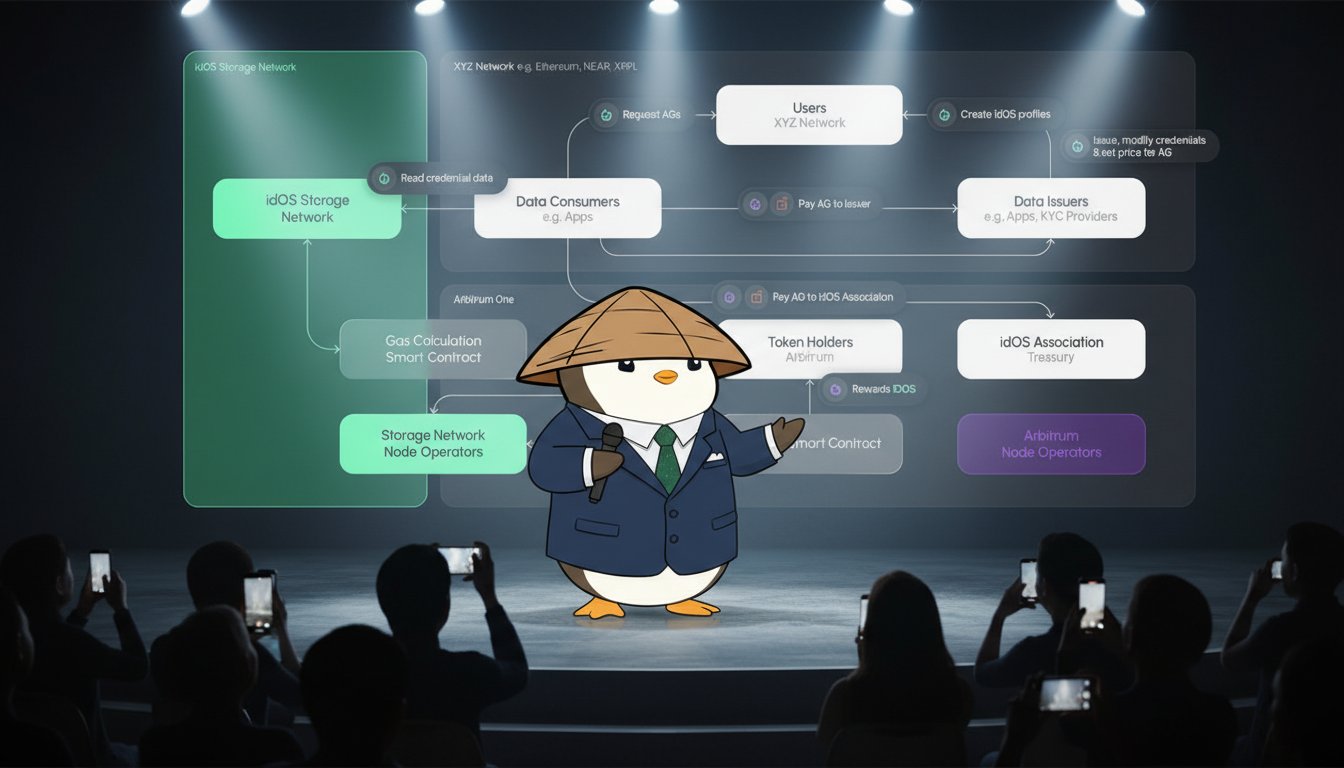
$DOS is the coordination layer of this system. Its uses are straightforward: subscribing to advanced capabilities of Bubble Engine, such as proactive SOP optimization and custom AI workflows; paying intent execution fees with $DOS, which is cheaper than using other mainstream tokens; service providers, validators, third‑party AI Agent providers, and similar roles must stake $DOS as performance collateral and a qualification barrier, while token holders who don’t provide services can delegate. Additionally, it grants on‑chain governance voting rights. Stakers of $DOS may also receive extra AI consumption allowances.
The token economics is, in my opinion, the most noteworthy part.
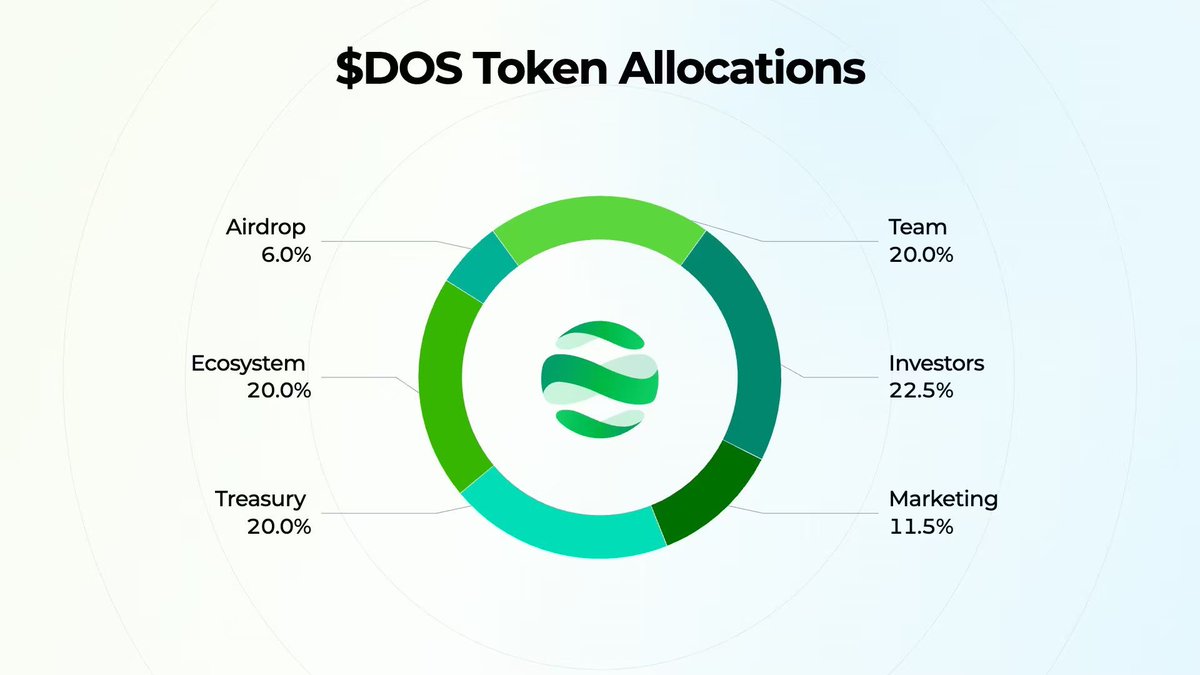
At the TGE, the initially unlockable portion comes entirely from ecosystem operations, treasury, market, and community distribution—team members and investors cannot unlock even a single token on the TGE day.
Team and investor allocations share a 12‑month cliff with zero unlocking during that period, followed by linear release over 48 months, meaning it takes a full 60 months after TGE for them to be completely unlocked. The design is straightforward: the cliff enforces a minimum commitment period, linear release prevents dumping a large chunk at once, and it cleanly separates ecosystem funding from insider shares— the network gets capital to operate, but insiders have no early exit loophole.
There are many projects that claim community‑first, but few actually publish such a token unlock schedule.
AI has already lowered the cost of creation; the next hurdles are operating, launching, and growth costs. For a one‑person company, this directly determines how big of an achievement you can accomplish.